ANIME REVIEW: And Yet the Town Moves (Soremachi)

Soredemo Machi wa Mawatteiru - 09 - Large Preview 02

Slice-Of-Life Done Right

Sometimes when an anime series doesn’t catch on, it’s not the fault of the series itself, but just a matter of a mismatch with its audience. The 2010 anime And Yet the Town Moves from Sentai Filmworks (known in Japan as Soredemo Machi wa Mawatteiru, or Soremachi for short) is an excellent case in point. It didn’t make much of a splash here in the United States because it’s such a thoroughly Japanese slice-of-life anime, but that obscurity is a darn shame, because the series is pretty fantastic.

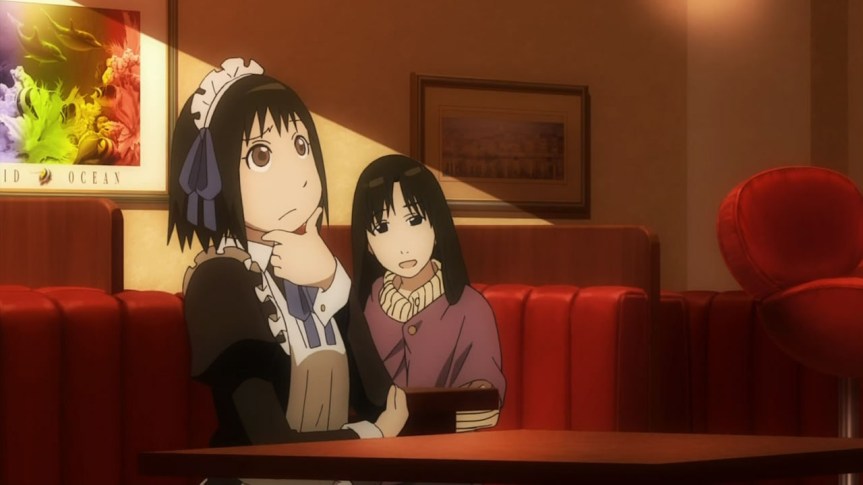
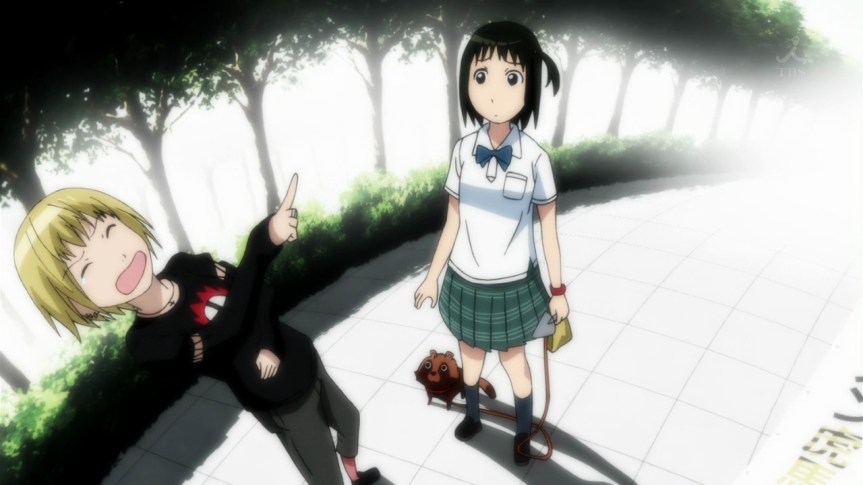
And Yet the Town Moves follows the daily life of Hotori Arashiyama, a loveable dingbat of a high school girl who lives in a small Japanese town, dreams of becoming a detective, and works part-time as a waitress in a maid café. The series also features her family, her teachers, her boss, and her friends: a brainy but slightly arrogant cutie (Tatsuno / “Tattsun”), a cool and rockin’ upperclassman (Kon), a boy who secretly crushes on her (Sanada), and a ping-pong champ (Haribara). Together they… just live normal lives, really. Just funnier than ours.
SoredemoMachiwaMawatteiruep03a.jpg~original

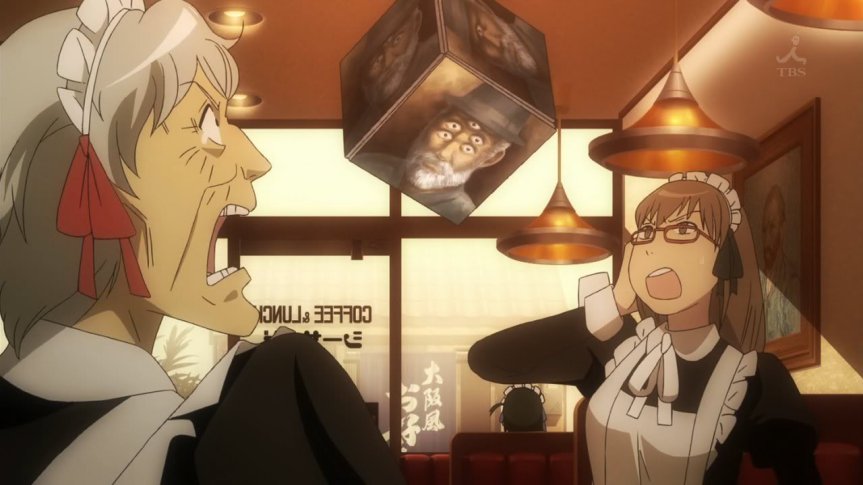
On the surface, it sounds like a less-than-inspired entry into the “cute girls doing cute things” genre, but that stereotype and even the summary I just gave start to break down when you start looking at the details. With the exception of Tattsun, none of these girls are breathtakingly pretty, and poor buck-toothed Haribara is ugly as sin. The maid café where Hotori and Tattsun work is actually a run-down regular café the elderly owner thought she’d spice up by wearing uniforms. Despite occasional flashes of surprising brilliance, Hotori is mostly dumb as a rock and whines a lot. Wannabe-badass Kon is secretly a mama’s girl.

All of these characters, and the town itself, are just very real. This is not the cute-washed Japan of most girl-group anime, nor a self-absorbed otaku geek-fest, nor a stylized samurai epic, nor a whimsical Miyazakified Japan of Disney-level purity. This is how people really live, and how people really are: flawed but generous at their cores, living a life that can be funny not because of the environment itself but because of people’s reactions to it. That level of comfort with everyday life and confidence in finding what’s hilarious about it are the qualities that make And Yet The Town Moves special.
soremachi11-02

With that said, this same realism might have hurt its chances on this side of the Pacific because the series is just so Japanese. I consider myself fairly well-versed in at least most surface aspects of Japanese culture, but this show pulled out puns, folklore, superstitions, and random little customs and traditions that I’d never even heard of. The style of humor is also very typically Japanese, which won’t deter dedicated anime fans but might raise the hurdle a bit for more casual viewers.

Speaking of humor, the plotting of the episodes deserves major credit for the way it contributes to the slow-burn comedy. Virtually all of the comedy can be tied to two concepts: a meandering common thread that leads to unexpected results, or an escalation of something that should be simple and low-key into something epic. The “common thread” is announced by our very philosophical narrator at the beginning of each episode and repeated at the end, at which point his abstract point has often taken on very funny concrete implications in the lives of the characters.

soremachi-1

And Yet the Town Moves was produced by studio Shaft, which also produced Maria Holic. Fans of the latter will definitely see some correlation in the humor styles and in some characters (esp. math teacher Mr. Moriaki and MH’s Father Kaneda), but Town is much gentler in its humor compared to the dark, biting parody of the yuri genre presented in Maria Holic. Another commonality with Maria Holic is that Town sometimes introduces strange science-fiction elements into its otherwise grounded story, much of which can be attributed to Hotori’s overactive imagination, but not all.

Other stuff worth mentioning include the visuals and the music. As I mentioned, this is a Shaft anime (which produced Maria Holic, Monogatari, etc.), and their reputation for beautiful artwork does not fail them here. The town itself is vibrant and well-realized, and the variety of character models is a great breath of fresh air. While the background music is seldom anything to write home about, the opening and ending tunes do deserve special recognition. The ending, “Meizu Sanjou!”, is not exactly contagious, but it is funny and captures the series’ humor well. The opener, “Downtown,” is a beautiful, jazzy earworm that uses trumpets and glitz to great effect while capturing the visual beauty of the art style and animation. (Watch it below.)

https://youtu.be/UpuwLex5S5s

Altogether, And Yet the Town Moves is 110% worth your time. It’s visually gorgeous, laugh-out-loud funny, and genuinely sweet without ever dipping into cheap sentimentalism, melodrama, or five-cent whimsy. It’s a slice of life done right, which is a rare and beautiful thing. Be sure to check it out.
 

Baudelaire and “The Seven Deadly Sins”

Seven Deadly Sins - Diane

The Giantess

In times of old when Nature in her glad excess
Brought forth such living marvels as no more are seen,
I should have loved to dwell with a young giantess,
Like a voluptuous cat about the feet of a queen;

To run and laugh beside her in her terrible games,
And see her grow each day to a more fearful size,
And see the flowering of her soul, and the first flames
Of passionate longing in the misty depths of her eyes;

To scale the slopes of her huge knees, explore at will
The hollows and the heights of her — and when, oppressed
By the long afternoons of summer, cloudless and still,

She would stretch out across the countryside to rest,
I should have loved to sleep in the shadow of her breast,
Quietly as a village nestling under a hill.

— Charles Baudeliare, (Translated by George Dillon, Flowers of Evil; NY: Harper and Brothers, 1936)

***

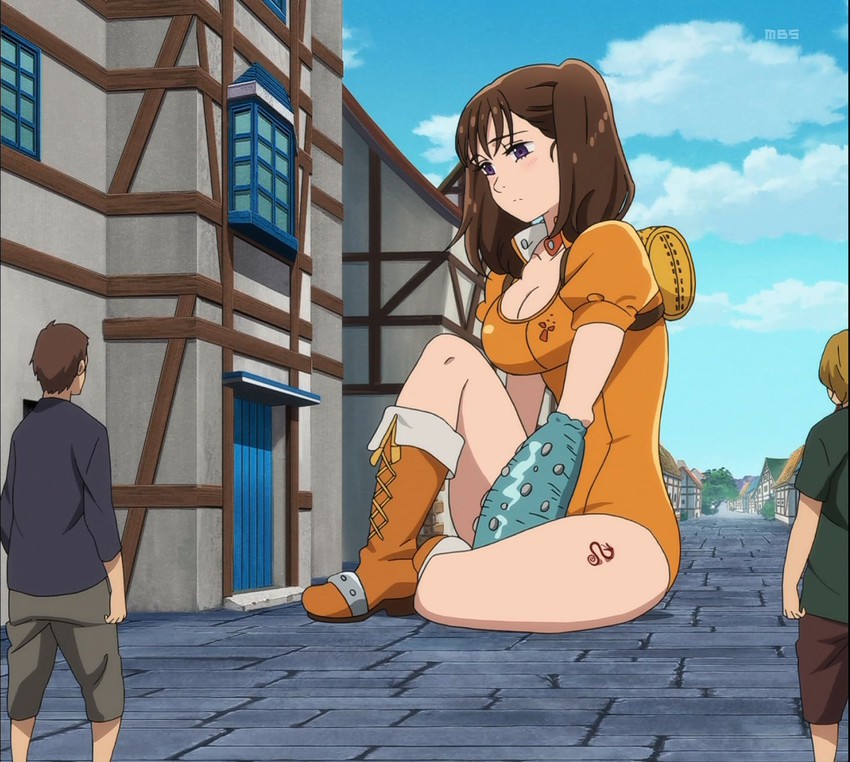
I ran across this poem last night while reading a selection from Charles Baudelaire and thought of this character, Diane the giantess. I doubt very much that Baudelaire would mind being associated with an anime called Seven Deadly Sins (the sinful old scallawag), so I went there.

MANGA REVIEW: My Monster Secret

My Monster Secret 1

The “monster girl” craze continues with this new manga by Eiji Masuda. My Monster Secret tells the story of Kuromine Asahi, a high school student with a nonexistent poker face who can’t tell a fib or keep a secret to save his life, to the point where his classmates have taken to calling him the “Holey Sieve” (because he spills everything). However, Kuromine has an important secret he doesn’t want blown prematurely, which is that he’s crushing hard on his quiet and mysterious classmates Youko Shiragami. He tries to catch her alone to tell her he likes her before his face gives him away, but in doing so, he discovers she’s a vampire! She plans to leave the school immediately, but he convinces her to stay with the promise that, just this once, he won’t spill the beans. What will be the outcome when the guy who can’t keep a secret embraces a secret that must be kept?

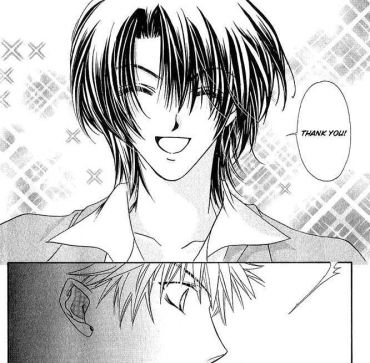
My Monster Secret has a very cute premise, and the execution lives up to its cute potential. Kuromine’s inability to keep his heart off his sleeve is funny and endearing, and the once-quiet Youko opens up to him to become a bubbly (and totally oblivious) girl with a million-dollar fanged smile. (Seven Seas Manga decided to translate her brash Osaka accent as a Valley Girl in their localization, which is an interesting choice, but for the most part it works.) Most of the other characters in the book aren’t as vibrant but do serve their purpose – the only exception is the class rep Nagisa Aizawa, who is actually more interesting than the two main characters and who has an odd secret of her own. And in terms of this book’s virtues, the artwork absolutely has to be mentioned. With unique and well-drawn character models and great facial expressions, the art is fantastic and is easily the best part of the book.

My Monster Secret 3

Unfortunately, the brilliant artwork is underserved by a lot of sub-par comedy and lazy writing. The big problem with My Monster Secret is that it’s a romantic comedy that’s neither particularly funny nor all that romantic. This book telegraphs its jokes about a page in advance so that by the time the punchline finally lands, it has lost considerable steam, and the book’s heavy reliance on characters’ overblown reactions (“Oh, wow! Oh, no! Isn’t that crazy?!”) is seldom enough to keep the gags from landing like a lead balloon. It also misses a lot of opportunities to use its “monster girl” premise in funny and creative ways by downplaying it. Part of what makes series like Monster Musume and A Centaur’s Life really work is that they don’t shy away from exploring the pros and cons that come with being a particular monster-person. On the contrary, they embrace it, and it’s often their most interesting subject matter and the source of their best jokes. Other than making sure people don’t get too good a look at her teeth, we don’t see much in the way of “vampire problems” from Youko Shiragami just yet. As for the romance department, the first volume contains minuscule romantic tension because none of the characters (even the lovestruck ones) seem to be able to work themselves into anything like anxiety or self doubt – anything more than temporary annoyance, really – over their romantic failures.

In this manga’s defense, I do get the strong vibe that perhaps it was geared toward a considerably younger reader than yours truly (I’m thinking younger teens, probably age 10-16), and a reader of that age might be a lot more forgiving than I was on the points listed above. With that said, I can’t help but think that even my teenaged self might have felt his intelligence a little insulted by its shortcomings. There are too many good series out there that allow you to have your cake and eat it too (funny jokes and interesting / emotionally mature writing) to completely excuse a lapse in either area.

My Monster Secret 2

Despite its flaws, I’m not ready to completely write this series off, because it has enough potential and positive things going for it that a second-volume rebound is entirely possible. The art is absolutely stellar, and the main characters are likeable enough that I’ll probably keep reading My Monster Secret if it manages to drag its emotional maturity up to a more adult level. I will be browsing Volume 2 in the bookstore before taking it home, though. I’d rate this one a mild recommend (and it’s very clean, ye parents) for readers 16 and under, but probably only for dedicated “monster girl” fanatics above that age.

Note: This review was also published by the author on Amazon.com under the same pen name.

MANGA REVIEW: Never Give Up!

NGU 2

When you wanna be his girl, but you look like his homeboy

With Valentine’s Day around the corner, it’s time to review a particularly good and particularly weird love story. I can’t think of a more deserving candidate on both counts than the manga Never Give Up by Hiromu Mutou, published in English by TokyoPop. Never Give Up tells the story of a boyish girl in love with a girlish boy, who unwillingly adopts an alter-ego of a manly man to protect her girlish boy from girly girls and manly men who love men. If that made your head spin, let me start at the beginning…

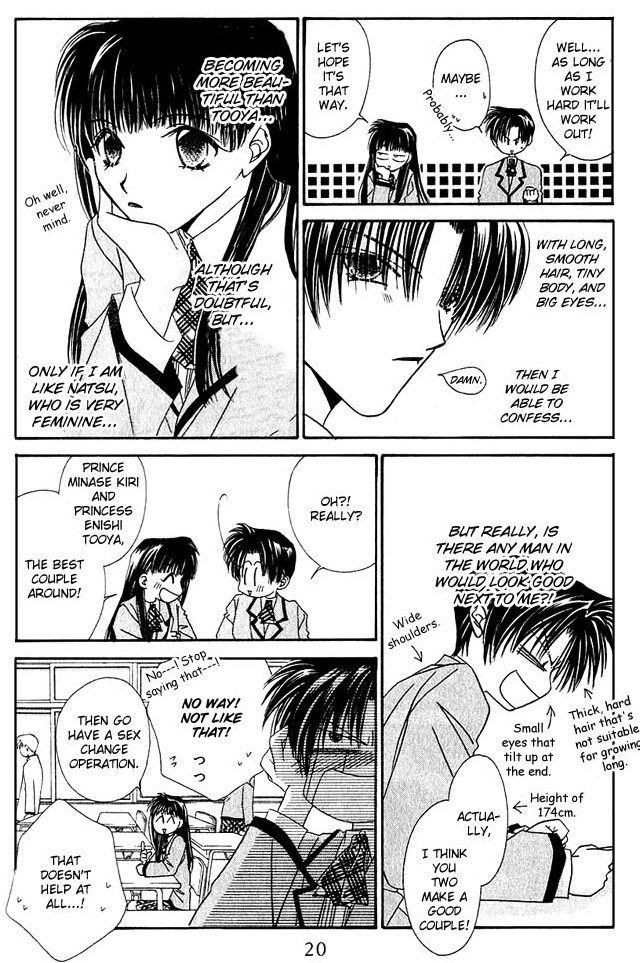
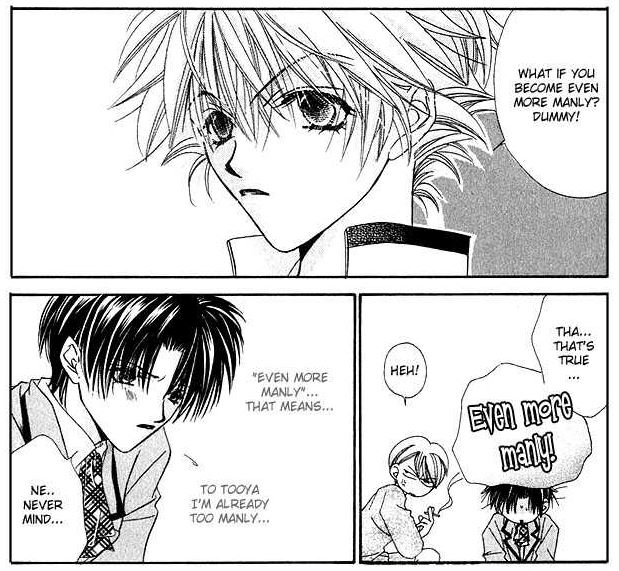
Kiri Minase is the daughter of a modeling agent and a male model, and she inherited their good genes – but unfortunately for her, she almost exclusively got her dad’s masculine good looks. Standing nearly 6 feet tall, curveless but athletic, with short hair that refuses to grow out, a piercing but kind gaze, and flawless, sculpted facial features, Kiri is the kind of girl who makes other girls feel sexually confused, and she’s none too happy about it. Making matters worse, Tohya Enishi, the boy she’s loved since childhood, is quite handsome but very petite and delicate. Kiri promised as a child that she wouldn’t consider herself worthy of him until she became more beautiful and princess-like than her prince, a declaration she has come to heartily regret in the present. Below, she vents to the sympathetic ear (ahem) of her best friend, Natsu.

Never Give Up 3

The awkward close friendship between Kiri and Tohya reaches a crisis point when Kiri’s mother (Satsuki Minase) recruits Tohya as a male model for her agency. Kiri has long been insecure about her connection with Tohya, and this news freaks her out as she imagines her beautiful beau thrown into a sexual feeding frenzy of experienced women and gay men. She demands that her mother hire her as a model as well so she can watch over him, which earns her a blow to the head and a “That’s rich!” from her not-exactly-gentle mom. However, when Satsuki’s other male model unexpectedly cancels, her mother offers her the chance to “go undercover” and take his place as a male model.

Kiri reluctantly accepts and does the gig under the alter ego “Tatsuki,” but what was supposed to be a small, one-time fib becomes a life-consuming act when Tohya and Kiri hit the big-time together as the hottest new thing in male modeling. Kiri’s mercenary mom refuses to let her quit, and Kiri herself is reluctant to retire “Tatsuki” because it lets her spend time with Tohya and watch out for him. Still, every success as Tatsuki is carrying her farther and farther from her goal of becoming the kind of woman she yearns to be. Further complicating matters, the aloof Tohya is incredibly hard to read, and suitors of both sexes start coming after Kiri and Tohya on the job in ways that constantly threaten to blow her cover or break her heart. Can Kiri and Tohya make it to “happy ever after” as princess and prince – and if it ever happens, will each of them be wearing the right clothes?

NGU 5

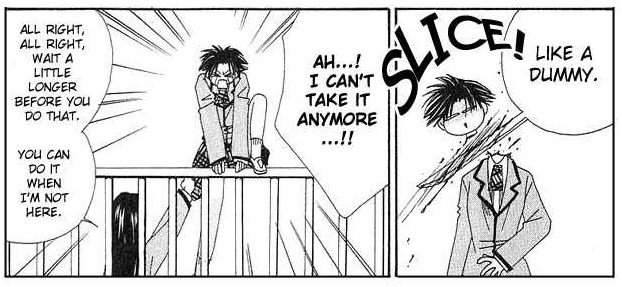
Never Give Up was a wonderful surprise to me. I approached the series skeptically as likely shojo manga fluff, but I was quickly drawn in by its quirky premise, fantastic humor, and great cast of characters. Kiri, in particular, is such a loveable heroine, and a rather unique one at that. Most “girls who look like boys” in anime and manga are petite gals with short hair who pass as small guys thanks to the right clothes (ex. Haruhi Fujioka in Ouran Host Club or Naoto Shirogane in Persona 4), but all it takes is an easy wardrobe change for them to undergo a feminine transformation at the finale. No such luck for Kiri! She truly has to find and seize an idea of beauty a little outside the mainstream if she wants to reach a happy ending. She’s also a very insecure and volatile teenage girl who tends to react faster than she thinks, which sometimes plays out in hilarious ways – her best friend has to hold her down from “Goodbye cruel world”-ing her way out an open window twice in just the first volume!

Never Give Up 6

The rest of the cast is just as good in their way. Tohya is a real cold fish most of the time, but it quickly becomes clear that Kiri’s feelings are not one-sided, and he’s fighting his own insecurities about the way he looks in comparison to her. Kiri’s mom is delightfully blunt without being cruel, and her dad (when he finally gets introduced) is a freak in all the right ways. Kiri’s no-nonsense best friend, Natsu, provides grounding throughout this wild tale, and the cast of personalities we meet in the modeling world are vibrant and unpredictable.

The art style in this manga is fairly simple most of the time, but in a way that feels uncluttered and clean – I liked it very much. I also felt like the pacing was generally good, and TokyoPop did a great job with the localization. You’ll see a few eyebrow-raisers like “Don’t be hatin’!”, but for the most part the translation sounds very natural without dating itself. (NOTE: The pictures shown on this page are taken from a scanslation for clarity’s sake. TokyoPop’s licensed translation is far, far superior.)

There are really only two things about this manga that hurt its quality as a recommendation. The first is the manga’s fault, which is that while Kiri’s insecurities can be compelling in short doses, they can become a bit annoying if you’re marathoning the series. At some points, you kind of want to shake her and tell her to stop boo-hooing and assuming the worst. The second thing isn’t the manga’s fault, but it is a bummer: Never Give Up was never completed in English. Its American publisher, TokyoPop, collapsed right about the time that Volume 8 came out, and to date no other company has licensed it. Between so many new series coming out each year and many better-known series from that time meeting the same fate, I’m not holding my breath for Never Give Up to be rescued, the title notwithstanding.

Never Give Up 7

That’s a shame, because this series really is both sweet and unique. It explores concepts of gender and beauty in a refreshing way by recognizing that sometimes men and women don’t fit into society’s ideas of what they should look like, and no amount of “makeover” will fix that. It explores how that “failure” messes with their heads, but it also shows a way out through unconditional love and slowly-accumulated self-respect. And, in the case of Kiri’s misadventures, it keeps the reader cracking up the entire time. Highly recommended.


NOTE ON AVAILABILITY:

Never Give Up is out of print, but since it’s neither rare nor widely known, supply and demand are on your side. You can probably pick it up very cheap. I’d recommend checking Hastings, eBay, Robert’s Anime Corner Store, or RightStuf’s clearance bin as good places to purchase this title.

Magical Eyes – Red is For Anguish

“Good morning!”

Just passing along a quick plug for an interesting-looking visual novel from the folks at Fruitbat Factory coming out later this month on Steam. Magical Eyes – Red is for Anguish ($15) is a mystery story about a killer doll who chops off a man’s arm and the two teens trying to track down and stop the evil entity. The art is beautiful, and the opening movie is very jammable. (Can’t help but think it would make for a nice morning alarm tune…)

ANIME REVIEW: Hanappe Bazooka

SPECS

Available Formats: VHS only

Run Time: 45 minutes

Sub/Dub: Sub only

Publisher: ADV Films

Year: 1992

Rating: NR, but 16+

Those Obnoxious Demons

It’s interesting how certain anime or manga publishers sometimes get a “lock” on certain creator’s works. Just as Viz had and has the rights to almost all of Rumiko Takahashi’s series, back in the 1990s Houston-based A.D. Vision (or ADV) achieved a near-monopoly on the works of manga-ka Go Nagai. I would be interested to know if this was founded on some sort of business arrangement with a Japanese counterpart who worked closely with Nagai, or if it was the result of some bigwig at ADV being a huge fan of his work.

Regardless, a “Go Nagai empire” was in many ways a strange choice of monopoly. I say this because Go Nagai is the reigning king of acquired taste and uneven results. Over the years, anime based on his work have generated some international smash hits (Mazinger Z, Cutey Honey, Devilman), some titles that gained niche appreciation but no widespread popularity on this side of the pond (Demon Prince Enma, Devil Lady, Kekko Kamen), and some truly wretched drek that is better off forgotten (Demon Lord Dante, Black Lion, Violence Jack). Good, bad, or ugly – complete or incomplete – ADV was on a mission to publish the anime adaptations of all of them. However, of all anime based on Go Nagai’s work and published in North America, perhaps the most obscure was the weirdo title Hanappe Bazooka.

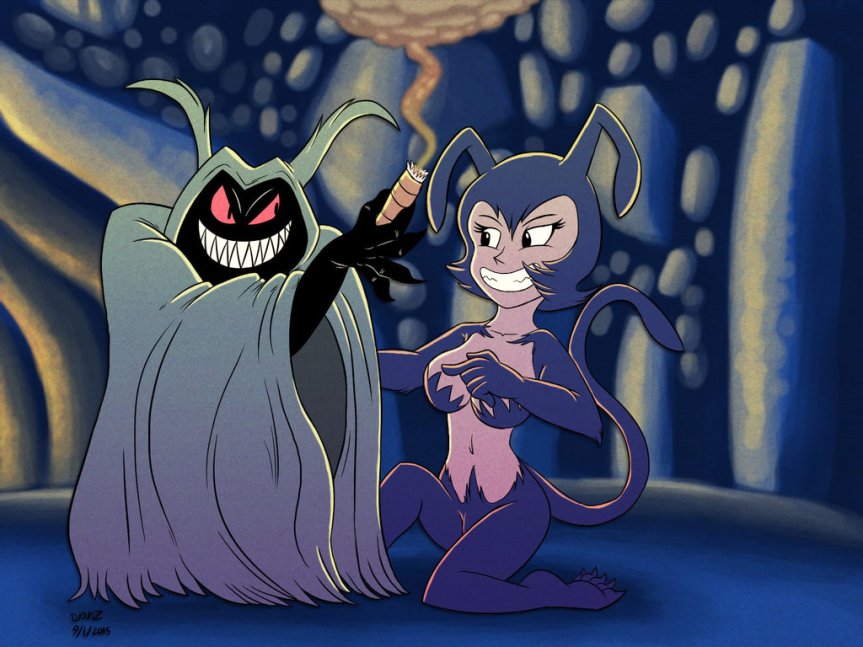
Hanappe Bazooka was a 45-minute OVA that followed the misfortunes of a young man named Hanappe who gets roped into a way-too-close encounter with the demonic kind. Hanappe is a bit of a coward with terrible luck, and the anime starts with him trying to outrun a local gang. He ducks into a video store to escape, happens upon a pervy VHS tape, and covertly slips it under his shirt and takes it home. He watches it that same night, and in the middle of… doing what you do while watching such a tape… the sky becomes pitch-black above his house, a portal opens to an eldritch dimension, and these two come out: the demons Bazooka and Dance.

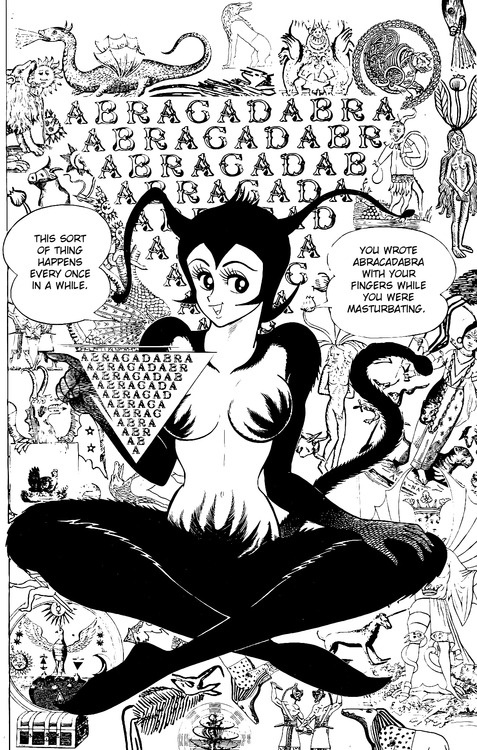
Hanappe Bazooka - Dance (Manga)According to Dance, Hanappe accidentally performed an obscene rite during a cursed planetary alignment that opened a portal from the demon world. The ancient rite had the exact same motions as Hanappe dancing around with his **** out, and in Dance’s words, “When you came… so did we.” (Welcome to the world of Go Nagai, people.)
What follows is Bazooka and Dance making themselves at home in Hanappe’s home and striking up elicit (but surprisingly consensual) trysts with his mother and sister. In exchange, they try to offer Hanappe one demonic superpower after another – super-strength to destroy the gang, a ray beam from his finger that auto-seduces women, help getting closer to his crush – all of which backfire horribly and hilariously. In the course of these twists and turns, we discover that Dance and Bazooka are actually aliens from space, and humanity’s previous experiences with their twisted kind gave rise to lore about demons.

The state of affairs that is making Hanappe miserable is heaven to everyone else in his life, and his family, Dance, and Bazooka all mock his suffering and basically say Hanappe can go jump in a lake if he doesn’t like it. They push him too far, though, and Hanappe eventually does something shocking and tragic. The anime takes a surprising turn at this point as we find out that Dance and Bazooka aren’t as heartless as they let on, especially where Hanappe is concerned. They resolve to make things right with their erstwhile-victim, no matter the cost or danger.

In the end, Hanappe Bazooka is emblematic of what makes so many Go Nagai anime adaptations a goulash of the terrific and the terrible. On the plus side, this thing is batshit insane in terms of its plot, and I would have to worry about anyone who claims “I saw that coming” more than a few seconds in advance. I also really started liking the characters of Bazooka and Dance by the time the credits rolled. They’re certainly still mischievous, but in the end, the demons were the most human characters in the cast. (Kind of a Go Nagai trademark, that.)

bazooka_and_song_by_megadrivesonic-d9b0n4g

On the downside, this anime is badly rushed and utterly schitzophrenic in terms of mood. This anime jumps from being utterly horrifying or tragic to making cheap boner and fart jokes at a second’s notice. It also tries to include way too much in a 45-minute timeframe: we have a Hanappe’s personal struggles, his love interest’s pathetic backstory, information about the demons’ alien society, and a cosmic final battle all thrown at us far too fast to do justice to any of these themes. I get the strong impression these are problems with the anime adaptation rather than Go Nagai’s original manga, though. From what I’ve seen, it was more light-hearted throughout, and the plot progressed at a much more leisurely (and sane) pace, letting things play out in monthly installments over 3 years as opposed to being crammed together in 45 minutes.

Two last quick things to mention… First, it’s important to note that despite Hanappe Bazooka’s seeming randomness, it borrows a huge deal from Rumiko Takahashi’s Urusei Yatsura, which was published the previous year (1978 versus 1979) and became a smash success. Urusei Yatsura introduced the concept of extraterrestrials influencing mankind’s conception of demons (there, the alien oni / ogres), and the fact that we have another alien-demon girl chasing a horny-but-unfortunate guy who looks just like Ataru Moroboshi seems like more than just a wild coincidence. Still, Go Nagai does make the material his own – Bazooka and Dance are notably more demonic in attitude and presentation than Lum, the material is gleefully irreverent, the humor is more defiantly childish, and the ending is weirdly touching despite all the nonsense that came before it.

Hanappe and Lum

Lastly, if you happen to get your hands on ADV’s old VHS tape (the only official release of Hanappe Bazooka in North America to date), be sure to keep watching after the credits roll. The VHS has a really fun featurette showing the voice actors and actresses doing their thing, a little directorial discussion about the anime adaptation and storyboard, and Go Nagai himself making a voice-acting cameo in the OAV. (His nervousness over his three-second role is funny and endearing.)

And that’s it! Hanappe Bazooka isn’t one of the best or most essential Go Nagai anime out there, nor would I pay more than $25 or so for it unless you’re a very determined completionist. That said, it is fun and a genuine example of “anime obscura” that you can out-hipster your friends with. Check it out if you get a chance.