The Ambience of Haruhi Suzumiya’s “Endless Eight” 15 years later

In all of my years of kinda-sorta-halfway keeping up with what’s happening in the world of anime, I don’t believe I’ve ever come across a series that is more infamous than Kyoto Animation’s 2006 effort, The Melancholy of Haruhi Suzumiya. The series as a whole was pretty weird for its era, but the game has changed a lot since 2006 when Light Yagami was eating potato chips way too dramatically and adding fuel to the “anime is too over the top” fire… that was probably still raging from Yugi Moto’s hair. Anywayzzz… I digress.

Haruhi Suzumiya introduced the anime world to some new concepts that in my humble and not-at-all-biased opinion (KyoAni rulez!) helped prime other anime for groundbreaking experimentation and developed the medium further. Probably the most notable part of this bizarre telling of an already bizarre story is an arc of the show called the “Endless Eight.” MINOR SPOILER ALERT: It’s going to be difficult to talk about this arc without giving some of the plot away, but I’ll try!

After a long wait between the airing of the first season (which initially aired out of sequential order, which is kind of awesome in its own confusing way) fans were really stoked to see what Haruhi and the gang were going get themselves into now. And what they got… was a series of episodes that seemed to be all exactly the same! These eight repeating episodes straight in a row (over half of the entire season!) made up the infamous “Endless Eight.” (According to Wikipedia, in the original 2009 re-broadcast the new ‘Season 2’ episodes were intermixed with the re-airing of the first season, in chronological order this time.) Eight episodes in a row of the old “stuck in a time loop” plot device a la Groundhog Day, except with more anime boobies and less Bill Murray. So… win? I guess?

Yea, this is better.

Let me be really clear about something: at face value this series of episodes is not satisfying. Well, not in the traditional way. It’s actually kind of annoying. I have friends that have just straight-up walked away from the show because of this arc. Even I skipped most of this arc when I first watched it ten years ago. It’s puzzling… Why would KyoAni put so much effort and stock into what—for any anime, including this one—is surely a death knell? That was what I aimed to find out when I returned to the series the other day.

I planned to check out the show again anyway because I’m on a personal mission to watch everything KyoAni has done. And strangely, even though I skipped it the first time, this idea of showing essentially the same episode over and over again was the thing that really stuck out in my mind about the show as I got ready to take the dive back in. Why did they do that? I wanted to know. Was it a clever gimmick that they took too far? I don’t know for sure, but here are some of my thoughts right after finishing the endless eight arc.

I don’t want to watch the next episode where things go back to normal just yet. It could just be fatigue from having sat through all eight episodes pretty much back to back, but I think it’s because I got so used to the plot of the arc that new stuff feels jarring somehow. Besides, I binged all 12 episodes of The Promised Neverland again just the other day in one sitting. And that was nothing.
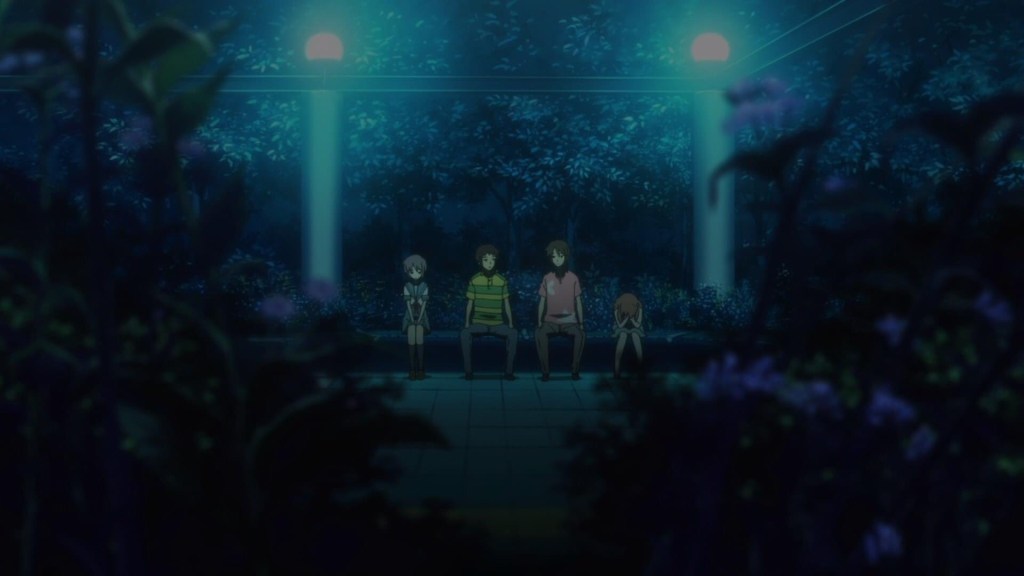
It became apparent midway through the arc that you can mostly tune out all of the dialogue (since it so rarely changes) and watch for other elements of the plot that differ. I only really started focusing on the variations at episode five, and it became like a little game I was playing. How many differences could I spot? What was the same and when? It was actually pretty interesting to have an anime take the thing that’s most “foreground” in your understanding (e.g. the narration, dialogue and sequence of events) and make those loop while the “background” stuff (the camera angles, clothing, etc.) changes constantly. It really turned my perception of how I watch things on its head—as in, what I most pay attention to. If I didn’t switch this focus, I wouldn’t have been able to watch the whole thing.

But I was still determined to know why the creators would make something like this. KyoAni is easily my favorite animation studio (sorry Ghibli), and I trust their vision and sometimes avant-garde approach. Hard to watch? Yes. Unnecessary to progress the story? Big yes. But I can’t help shake the feeling that I’m glad they did this… I’ll remember this series of episodes more than any big fight scene from My Hero Academia or any shocking revelation from Death Note.

I was going to try to list all the variances I caught, but honestly I know I didn’t even scratch the surface. But one scene particularly stood out for me. The clock at the end of episode five. At no other time did a scene like that happen. It was very subtle, but it was almost like the animators were telling me, “Yes, we know what we’re doing. We know how this feels for you.”
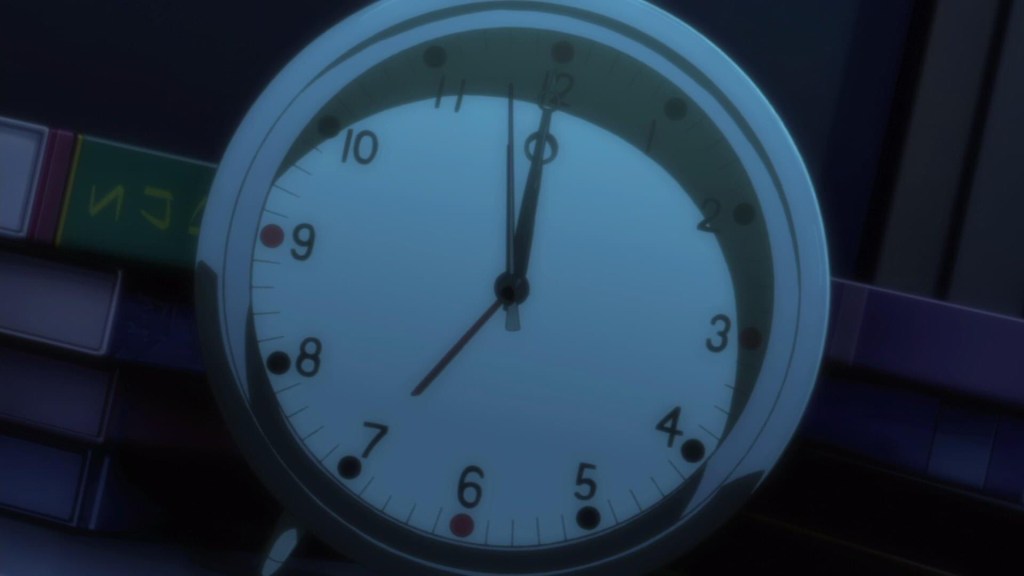
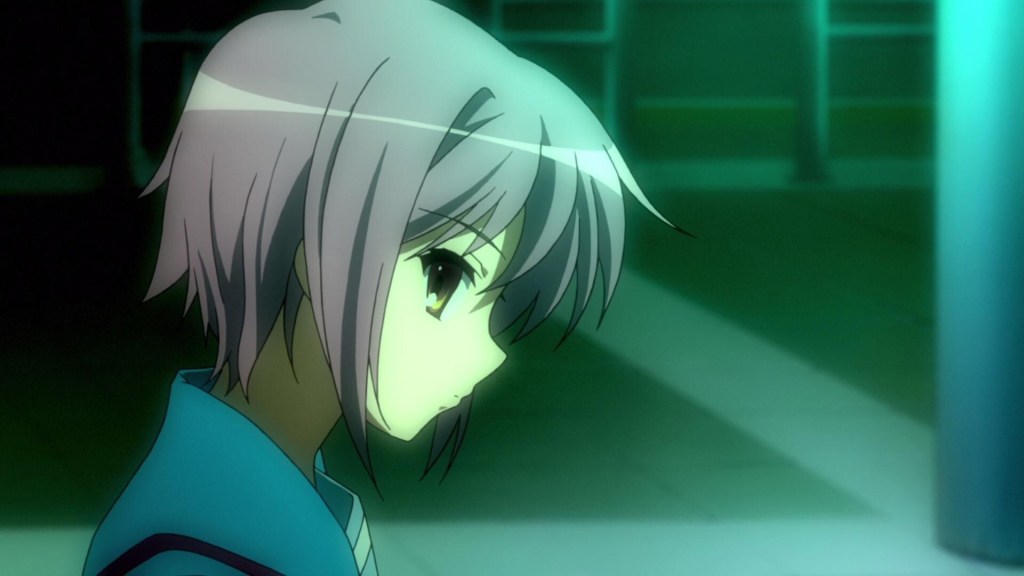
Here are a few comparisons I made to what I’m now referring to as “the ambient plot of the Endless Eight.” So, the set up is kind of like this: we have eight episodes that all have the same exact plot. The narration and dialogue from the characters doesn’t change (except veeerrryyy slightly). What they do during the episodes doesn’t change (again, except very slightly). So that’s the overarching loop; the “drone” if you will. But then, underneath all of that, the camera angles, shots, clothing, food, staging, and little things like Yuki’s mask all constantly change each time. Several things change only once (like the scene where Haruhi offers Kyon a takoyaki or something; she has a full tray every time, but once she offers it later when she only has two left). These all remind me of something totally unrelated.

Bibio’s Hand Cranked album is a meandering lofi acoustic instrumental album that is very strange. It has lots of trebley guitar loops that just drone on forever, but the songs still “move” and feel fresh and changing because of the background instruments. I read once that whenever presented with a myriad of sounds all at once (like in a song), humans like to focus on the thing that most closely relates to a human voice, whether that is an actual human voice or a lead instrument like a guitar solo or something similar. (Try listening to the intro to “Sweet Child O’ Mine” and focus on everything but the guitar). This makes an offering like Hand Cranked hard for some to listen to, because the ever-present guitar melodies are super-monotonous and repetitive. However, I realized that it’s like the “drone” of the songs. Drum parts and chord progressions in most songs are repetitive too, but why don’t we have difficulty listening to those tracks? An album like Hand Cranked simply flips the script of what songs are “supposed to do,” and the outcome is actually really satisfying.

Like a cool popsicle on a hot summer day

Now for the other musical connection I felt. There’s a bit in the Endless Eight where Haruhi eats a popsicle. It’s a background thing because what she’s saying would usually be the important part, and if there was only one episode, you might not even notice it, or at least not be able to remember its shape or color. The popsicle, like many other small things, changes every time except once! Two episodes in the middle of the arc feature a thin blue popsicle in place of the regular one. I wouldn’t have noticed this if the episodes weren’t back-to-back.

This reminded me of something I learned in college. The famous music producer and composer Brian Eno created ambient music back in the 70’s with an album called Music For Airports. (According to Wikipedia, this was not technically the first ambient music album ever made, but it was the first to ever introduce the term). He made the album from a studio experiment where he looped different tracks over each other endlessly, including some vocals, a piano loop, and some various other instruments. The catch is, the tracks had different lengths, so the loop actually happened at different times for each, causing them to constantly harmonize in different ways and keep the progression of the music moving forward. I’m not certain how relevant this is in discussing the show, but the popsicle thing felt like a visual representation of this musical experiment.

In a similar way to Eno’s experiment, The Endless Eight layers different looping and shifting elements over each other in different ways—or more correctly, in different patterns. The popsicle pattern could be something red, yellow, green, blue, blue, orange, or no popsicle at all, juxtaposed in the sequence against the color and style of Haruhi’s bikini, which has its own changing pattern. She wasn’t wearing the same outfit when the popsicle repeated. However, there were moments when a character wore the same outfit again that first showed up in an earlier episode.

*Dissociation intensifies

If I were a more patient and organized person, which I’m definitely not, I could find and write out every varying pattern of every insignificant thing in the arc and compare them to each other. However, that’s exactly my point—The Endless Eight arc makes the insignificant… well… significant, because what’s normally significant isn’t. I think it tries to force us to see that.

At the time of writing this, I’ll admit, I haven’t seen the movie The Disappearance of Haruhi Suzumiya yet. I’ve heard that the plot of the Endless Eight helps progress elements in the movie, most importantly Yuki’s reason for her actions. For those seeking some straight forward justification, this might satisfy. However, at this moment I don’t feel like it’s necessary. Life isn’t always means to a logical end and art (good art, I should say) is a reflection of life. That’s what I believe this ultimately is: good art. We humans enjoy stories that go somewhere. That have purpose… or at least, imply purpose. And mostly have a satisfying conclusion. One that wraps up everything in a pretty bow. Loose ends tied, questions answered and characters set free… to live out the rest of their now-boring lives, we assume. But life isn’t like that. And stories don’t have to be either. I guess that’s why I feel such a strong connection to music regarding this arc. We watch movies and shows and stuff for the ending, right? But we never listen to music that way. It is all about the journey with music.

The Endless Eight’s conclusion is just as frustrating as the whole arc is. Just one thing had to happen to break the cycle. One tiny, insignificant thing that wasn’t happening. And when it did…. ope! Well, back to normal, I guess.

…That was it. So simple, and yet so jarring and unrewarding. We’re left with what we experienced, and our feelings. Left with a bizarre perspective on reality. How different would my perception of life be from a different angle? What would this moment be to me, from a different camera view? If I’d worn a different shirt? I’m reminded now of Robin Williams’ character from Dead Poets Society as he stood on his desk for the first time. “The world looks very different from up here.”

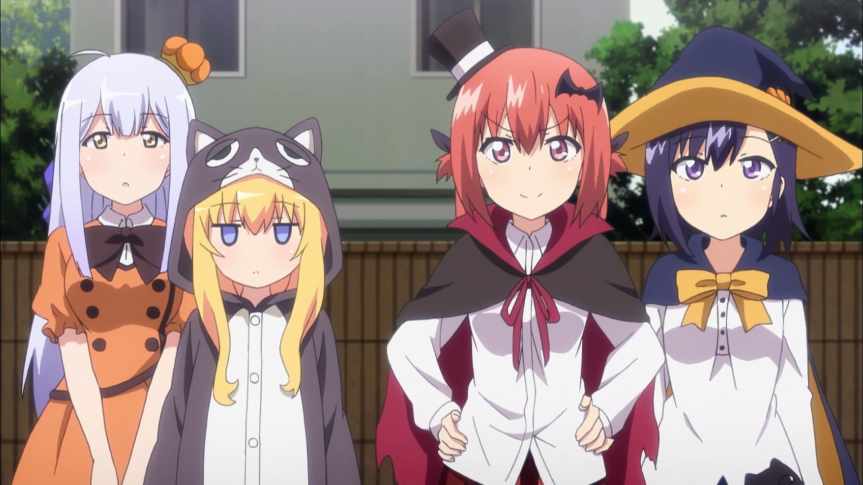
Five Must-Watch Halloween Anime (Bite-Sized Edition)

The spooky season is upon us, and this is the perfect time to binge some horror-themed or supernatural-themed anime to get in the mood for Halloween. With that said, there are only so many hours in the day, there are tons of anime that would fit the bill, and October is almost half-over! What’s an anime fan wearing a witch’s hat or hockey mask to do?

Luckily for you, Anime Obscura has curated a list of quick anime watches that fit the bill. These are all selections of episodes from longer series that don’t require a ton of prior foreknowledge. If you enjoy this sampling, be sure to put them on your list to check out later… maybe in November. (To the best of my knowledge, there is a marked lack of turkey-themed or Thanksgiving-themed anime, so you’ll need something to tide yourself over till Christmas.)

Before anyone gives me the Freddy Kreuger treatment for omitting Higurashi: When They Cry or your favorite horror anime of choice, keep in mind that there are going to be some fantastic horror-themed anime that won’t make this particular list, sometimes because they’re too long to qualify as bite-sized, sometimes because I haven’t watched them personally… and sometimes because a guy has to stop typing sometime.

So, let’s get with it, ghouls and guys!

Ranma 1/2 Episodes 73 and 140 (“My Fiance the Cat” and “Pick a Peck of Happosai”)

Let’s start things off on a light note… For anime watchers of a certain age, Ranma 1/2 needs no introduction, but the main points an unfamiliar viewer really needs to know are that Ranma is a powerful teenaged martial artist who is cursed to change sex every time he’s splashed with hot or cold water, and he’s semi-unwillingly engaged to a girl named Akane, whose family he and his dad now live with. A bevy of cute girls and weirdos who love or hate Ranma constantly make their lives difficult, and the biggest weirdo of all is Ranma’s dad’s evil martial arts master, a two-foot-tall panty thief named Happosai. Oh, and as an “important-only-for-here” aside, Ranma is deathly afraid of cats, and overexposure to him causes him to go into a berserk psychotic state.

In “My Fiance the Cat”, Akane becomes haunted by an amorous ghost seeking a bride. Ranma ain’t afraid of no ghost, but when the ghost becomes visible and turns out to be an 8-foot-tall ghost cat, he becomes pretty much useless.

In “Peck A Pack of Happosai”, the Ranma 1/2 gang discovers that messing with the occult has consequences. A couple of misplaced tarot cards cause Happosai to be split into multiple supernatural personas — a knight, a witch, a centaur, a vampire, an angel, and a devil. Ranma and company have to figure out how to re-seal this horrible horny horde before they destroy the city or maybe even the world.

Ranma 1/2 is streamable subbed or dubbed for free (with ads) on Vudu. Episode 73 is part of Season 4, and Episode 140 is part of Season 7.

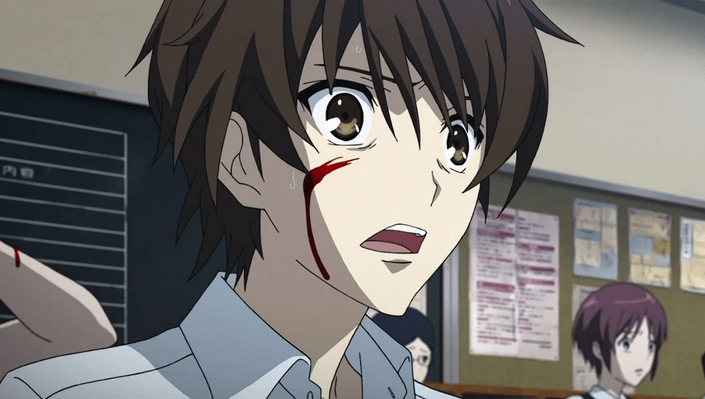
Dusk Maiden of Amnesia – Episodes 1 and 6 (“Ghost Maiden” and “Maiden of Vengeance”)

Dusk Maiden of Amnesia is my all-time favorite anime, not least because of the clever ways it explores how strong emotions, rumor, and belief all function together to make the phenomenon of ghosts possible within its world. The series follows a high school’s “Supernatural Investigation Club” whose club president (Yuuko) is actually a ghost herself, seeking answers about her dimly-remembered past. Only the main protagonist (Taiichi) and a distant relation of hers (Kirie) can see her, while the club’s most enthusiastic member and comic relief (Momoe) is blissfully unaware of her presence.

The first episode is necessary viewing to meet the members of the club and get a sense of what each of them is like and how they interact with one another. The sixth episode, “Maiden of Vengeance”, is the closest thing to a stand-alone horror tale that this series contains. The Supernatural Investigation Club is still poking around the school, trying to figure out if Yuuko is the school’s only ghost, when a girl who is an apparent paranormal-skeptic starts spreading a rumor out of the blue that quickly metastasizes into a full-blown panic among the student body. Her tales of a bloody executioner named Akahito-San roaming the school is making people act crazy with fear… and she seems to be encouraging this for some reason.

The entire 12-episode series is outstanding Halloween viewing, but these two episodes can be watched by themselves as a great snack-sized sample.

Dusk Maiden of Amnesia is streamable on HiDive or VRV.

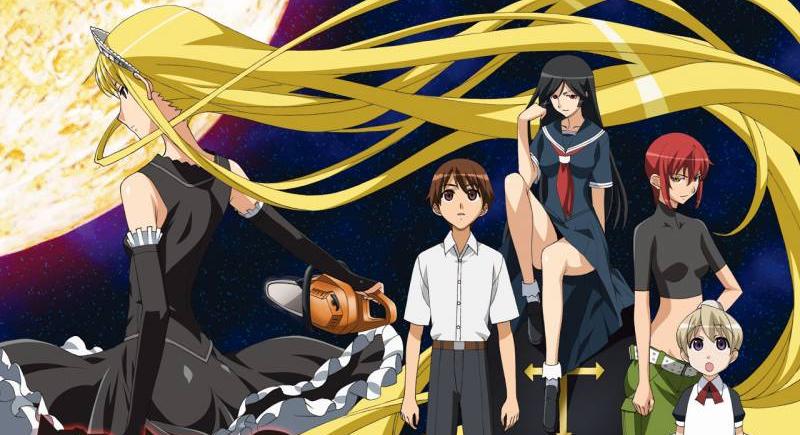
Princess Resurrection – Episodes 1 and 13 (“Princess Resurrection” and “Princess Sacrifice”)

Princess Resurrection is another fantastic anime whose 26-episode entirety makes for good Halloween viewing, but in keeping with our promise to keep this bite-sized, I’ll recommend episodes 1 and 13.

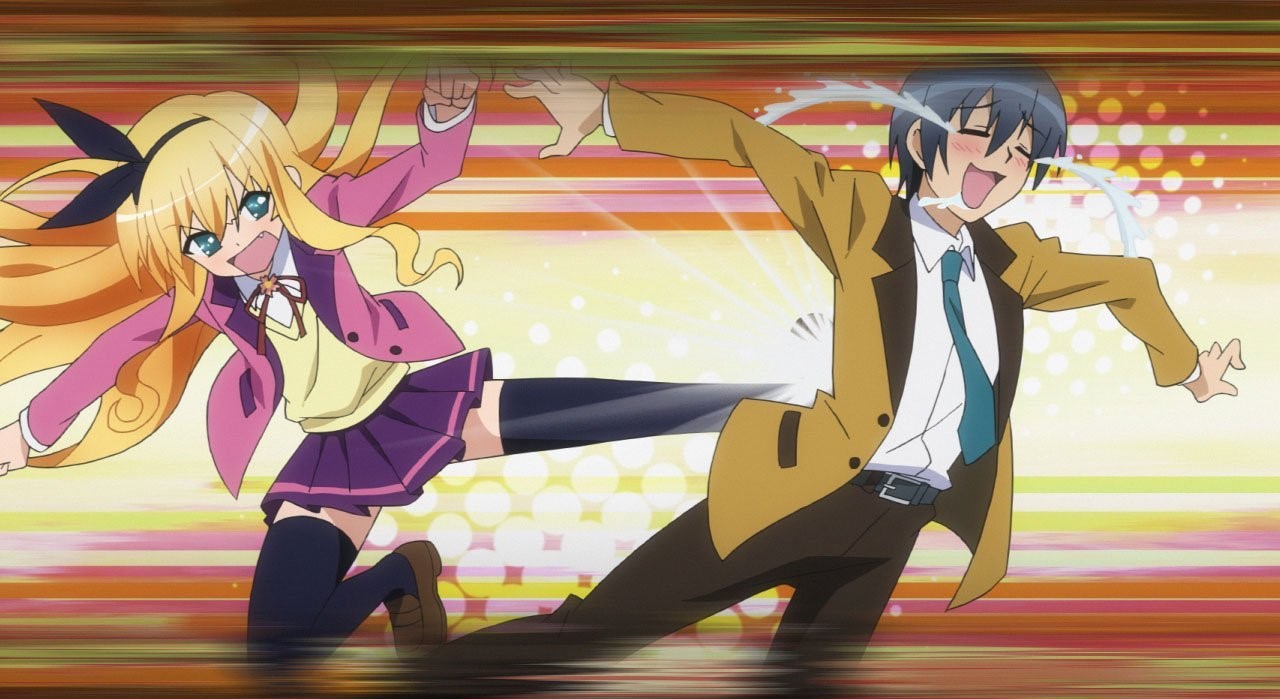
Episode 1 introduces us to our main protagonist, Hiro, who has traveled to a remote town to visit his sister, an airhead who has taken a job as a maid at a creepy Addams-Family-style mansion on the mountain overlooking the city. While in town, he sees a disaster about to befall a beautiful blonde girl dressed all in black, and in pushing her out of the way, he gets himself killed. Series over! (Okay, not really.) It turns out that the blonde, Hime, is his sister’s employer, and something of a literal princess of darkness. She resurrects him to a form of semi-life, but that comes with a bit of a price and a lot of trouble, as you and he will both soon find out.

Plenty of episodes in Princess Resurrection make for great October viewing, as they’re packed to the gills with monsters, vampires, zombies, Lovecraftian beasties… you name it. However, Episode 13 always stuck out to me as being particularly suspenseful and fairly unique for featuring an “unkillable slasher” villain a la Michael Myers, Jason Vorhees, or Leatherface. (For whatever reason, that trope is almost never used in anime apart from a humorous reference.) In any case, Hiro and Hime find themselves alone in an otherworldly village where one such monster holds bloody sway over the inhabitants. It’s genuinely creepy, and good stuff.

Princess Resurrection is streamable on HiDive or VRV.

Another – Collected Manga or Episodes 1-4

Another has often been nicknamed “Final Destination: The Anime”, and that description certainly isn’t wrong. Death itself seems to be stalking a group of high schoolers, with ordinary accidents turning lethal at the drop of a hat. The reason why is gradually revealed over the course of the entire series, and it would be a disservice to you to try to explain it to you here in summary form. It is clever, though, and feels like a worthy payoff for the most part. It’s also probably the goriest anime I’ve ever watched, bar none.

It’s worth noting that Another actually started off as a novel, then got adapted into both an anime and a manga shortly thereafter. Personally, I would actually suggest the collected all-in-one manga from Yen Press as the best way to experience this story. Being a comic, it’s a fairly fast read, and it explains a couple of things (especially about the ending) better than the anime did. However, unlike the anime, you can’t exactly “stream” a graphic novel and may not want to plunk down $30 on a lark, which is totally understandable. In that case, the anime absolutely won’t disappoint in terms of intensity and violence.

The first four episodes introduce us to Koichi Sakakibara, who has recently moved to a remote town in the Japanese countryside. His classmates seem oddly standoffish, as if his presence there is unwelcome, but not due to anything against him personally. At the same time, he takes notice of the fact that he keeps seeing a pale girl at the school wearing an eyepatch who none of the other students seem to see or acknowledge. Soon afterward, strange and horrible accidents begin befalling his classmates. Could the silent, ghostly girl be the cause? Or is there something else afoot?

Episodes 1-4 absolutely won’t explain the weird situation Koichi finds himself in, but it does give you an idea of the overall flavor of the anime and serves as a good jumping-off point should you wish to pursue it further.

Another is streamable on CrunchyRoll, HiDive, or VRV.

Ghost Hunt – Episodes 18-21 (“The Blood-Stained Labyrinth Parts 1-4”)

Ghost Hunt is a great anime with a simple premise and a very episodic nature, which makes jumping into a spot in the middle of the series easy as long as you know the setup. It follows the exploits of a group of ghost hunters and exorcists with a huge diversity of backgrounds and strengths. You have a paranormal researcher, an onmyoji (magic practitioner), a Buddhist monk, a Shinto priestess, a Catholic Christian priest, and a psychic, all of whom are loosely aligned as friends who help each other out on exorcism “jobs.” Joining them is our protagonist, Mai, a high school girl who made herself useful to the team in the first few episodes and started working with the paranormal researcher as his part-time assistant.

The team takes on a number of different cases during the anime series that get resolved over a number of episodes. Sometimes these involved solving a mystery but were not terribly dangerous, while others featured a supernatural threat that was actively harmful. Nothing before or after touches the Blood-Stained Labyrinth in terms of its deadly threat level, though. The team travels to a huge estate where people have simply been disappearing without a trace. The house is a massive complex with secret passages, dead-end halls and doorways… et cetera. It’s the labyrinth of the title. The kicker here is that these missing people have been gone for far too long to simply be playing hide-and-seek. And if the team isn’t careful, they may be added to the number of the house’s victims shortly… This story arc feels almost like an anime adaptation of The Shining or Hell House, and it’s great viewing. Without giving anything away, I also appreciated how this particular case wrapped up.

Ghost Hunt is streamable on the Funimation Channel.

***

So, there ya go, five anime selections to keep your Halloween spirit alive… or dead… or undead… however you prefer, really… in 2020. There are plenty of other anime and even other episodes I could have included, but hey, there will be other Halloweens and hopefully other Halloween-themed anime articles to write.

Take care, everyone! Stay safe, and may you always get nothing but the good stuff in your trick-or-treat bag!

ANIME REVIEW: The Devil Lady (Part 3)

NOTE: This is the conclusion of Anime Obscura’s coverage of the anime The Devil Lady. We will be delving into major spoilers this time, so be advised.

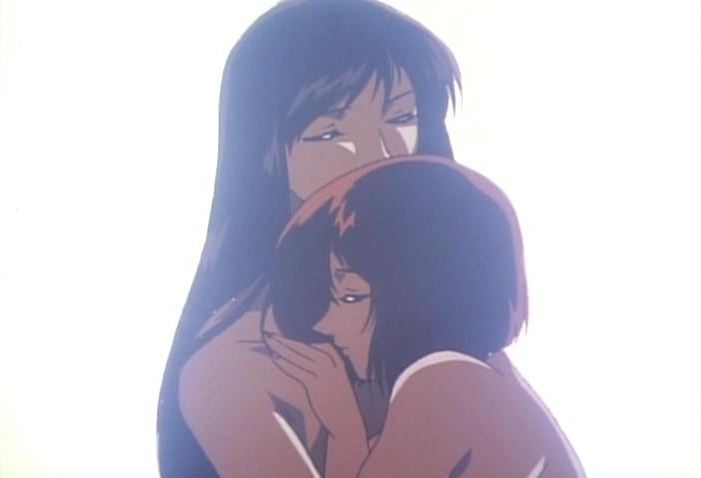
devil lady - asuka transformed 1

Last time we looked at how The Devil Lady portrayed a depressingly true-to-life depiction of how society would splinter were its premise to become a reality. This time, we’ll wrap things up by talking about the ending and how the anime provides an amazing character chemistry between Jun Fudou and Lan Asuka.

If the first half The Devil Lady is a story of Jun Fudou performing a scary balancing act between her two alter egos, the second half of the anime is one long, heartbreaking process of loss. As society begins falling apart, Jun’s personal life follows suit, and she gradually loses everything in her life that mattered to her. She loses her home—this former safe space gets destroyed by a cabal of violent devil-beasts. She loses her job and the work-relationships she had come to treasure as part of her identity. Her friendship with Kazumi splinters as the two part ways, with the younger model needing time to process the truth about the older woman she adored. She ultimately even loses her freedom as Lan Asuka and her former allies among the human commandoes isolate her, jail her, and ultimately use her as a lab rat. Finally, in the lead-up to the final battle, Jun loses everything and everyone she ever cared about, and she quite literally abandons her humanity, cutting her hair and declaring that, “I will never be human again.”

As all this has been happening, Jun’s powers as the Devil Lady have only been growing. To meet the threat of each new devil beast, she becomes stronger, faster, and tougher; develops new abilities such as an electric shock; and gains greater control over her powers of flight and her kaiju-sized “giga” form. With this explosion of power happening alongside a total emotional breakdown, you keep waiting for Jun to explode in violence at the unfairness of it all and lash out at the world. What actually happens is that Jun’s self-loathing makes her turn all that anger inward, and she retreats into herself. Even as a normal human before all this started, Jun was always incredibly hard on herself, her own worst critic, someone who didn’t trust her own value and constantly deferred to others. This trait was counterproductive in her human life, but it proves her salvation as the Devil Lady. Even when Jun gains the might of a goddess, she doesn’t think herself worthy of wielding that power except in service of others.

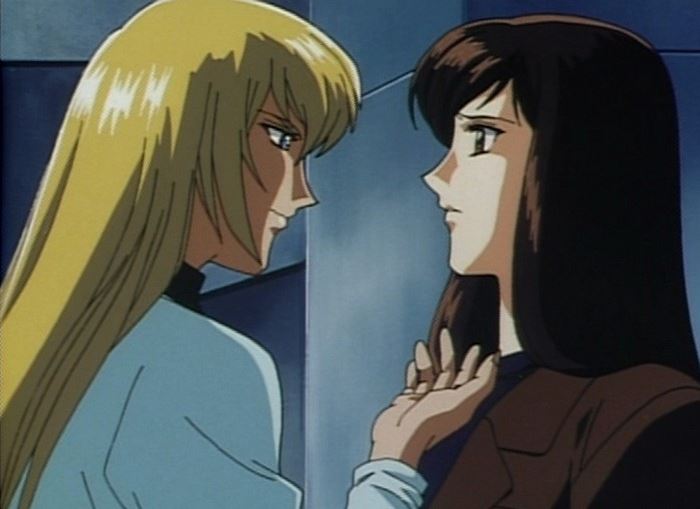
devil lady - asuka and jun 2

This sets her apart from Lan Asuka, who we eventually discover is a non-human of a totally different sort—an artificial being created from biblical-era instructions to inaugurate a new golden age. Asuka is also a hermaphrodite, which sets her apart from most of humanity even if her pseudo-Babylonian origins are left out of the picture. Asuka and Jun prove to be mirrors of one anothers’ personality. Both women are consumed with self-loathing and bitterness about what makes them different, but this emotion that leads Jun into humility instead leads Asuka into scorn. She views regular humanity as earth’s past rather than its future, and the devilmen and devil-beasts as evolutionary mistakes that must be wiped out in order for her to fulfill her destiny.

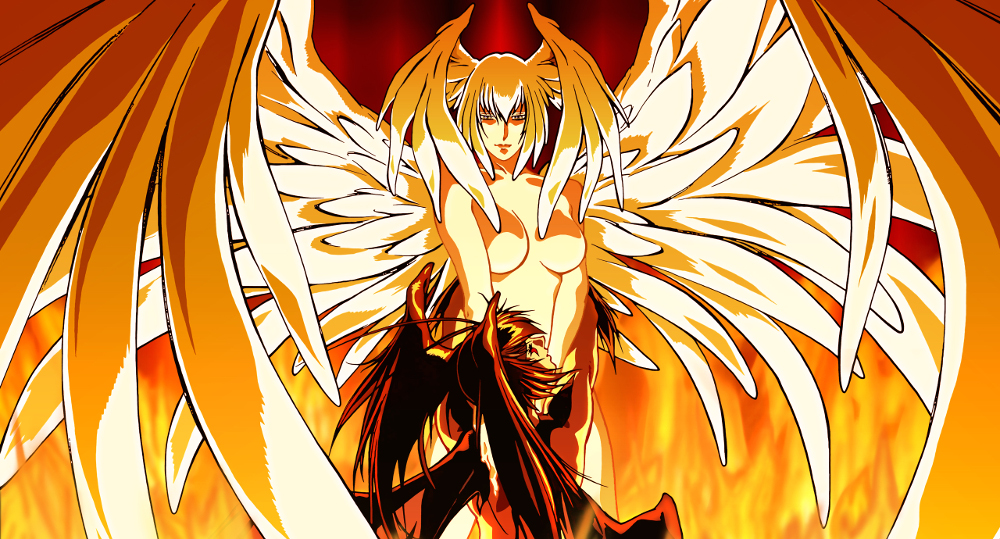
This part of The Devil Lady takes a trip into unexplained weirdness, but apparently the devilmen who have been killed in the concentration camps have been sacrificed and thrown into Hell through some weird rite that sends their life force and power to Asuka. Once she absorbs a critical mass of it, Asuka takes on an angelic form of Biblical proportions – winged, radiant, beautiful, gigantic in size, and (true to a biblical apocalypse) visible to all the earth and worshipped by it. Humanity’s elite see the proverbial writing on the wall and line up to worship Asuka as a goddess and the harbinger of a new age. However, Asuka’s paradise only applies to the “worthy”; those who don’t fit into her vision for the future (i.e. the devilmen) have no place there. This is part and parcel of the Nazi ethos that landed the devilmen in the concentration camps to start with, and Asuka is Lucifer incarnate—beautiful, all-powerful, fiendishly clever, and fatally proud. Her pride robs her of any sympathy for the weak, and even as she ushers in the start of a golden era, we see that her paradise is a sham for those who don’t meet her ideal.

The only living creature who meets Asuka’s superhuman ideal other than herself is Jun. When Asuka’s “pet tigress” refuses to join her, though, Jun gets cast into the depths of Hell itself with the other devilmen. Here Jun has an almost hallucinatory de profundis moment where she quite understandably gives up and wonders what the purpose of all her suffering was, but the memory of Kazumi renews her sense of purpose, and the rage of the slain devilmen gives her power. Jun may have nothing to lose anymore on the personal level, but she recognizes and reclaims what has been driving her all along: there are people suffering who need her help, and she alone has the power to do something about it. What happens next is possibly the coolest and most “Hell, yeah!” visual I have ever seen in anime: a pillar of fire the width of a whole city block erupts on the outskirts of Tokyo, and giga-sized Jun rises on bat wings straight out of the pit of Hell. I shit you not, the hair was standing on the back of my neck. After all she went through, seeing Jun claw her way out of Hell to kick Asuka’s ass made you want to stand up and cheer.

devil lady - dl battle 3

The final battle itself is absolutely epic and carries one final cost to Jun in the form of a double arm amputation, but the end result is worth the sacrifice. The world left in the wake of Jun’s victory is not without its problems. The rifts and emotional scars between humans and devilmen won’t heal overnight, and presumably devil-beasts may still sometimes emerge in cases where a person has a particularly striking transformation that they can’t control. But what Jun did leave behind is a world that has room for everyone, regardless of their genetics. We see this in the anime’s final scene, where two little girls run down the street together on their way home from school—one of them has a tail, and one of them doesn’t. What made me feel better than anything is seeing that this is a world that even has room for Jun Fudou. She was the person the girls brushed past on their way home, and while the sleeves of her coat flow emptily in the breeze, she herself is well-dressed and looks beautiful. Jun Fudou has become a representation for her world: scarred by her experiences, but alive, well, and forging a new future.

It’s a beautiful ending to an anime that threatened to resolve in nothing but heartbreak, and I think it’s a wonderful parting statement for this show as a work of art. I said in the first part of my coverage that The Devil Lady was so much more than its bloody cover art promised, and I hope the successive two articles showed in part why I feel this way about it. The Devil Lady goes to some incredibly dark places, but its underlying message is one of tolerance, forgiveness, and principled courage in the face of unprincipled fear. Jun Fudou is a hero for our time, or any time, and The Devil Lady absolutely deserves to be on your anime bucket list because of that.

devil lady - jun and kazumi 5

ANIME REVIEW: The Devil Lady (Part 2)

NOTE: Yikes! A whole year has passed since I posted the first part of my Devil Lady coverage. I feel sure that no one is waiting with baited breath on this as a continuation after such a long gap, but since the point of this is to spotlight a rather old anime, hopefully it will still be welcome and useful. I hope to start posting reviews here more regularly, so please bear with me!

This is the second part of Anime Obscura’s three-part coverage of the anime The Devil Lady. We will be delving into spoilers this time, so be advised.

Devil Lady - Red

In my previous review, I mentioned that The Devil Lady had many parallels with the Marvel comic X-Men in terms of telling a story about a mutant caught between a human world that hates her and a group of genocidal fellow mutants trying to recruit her. Where this anime differs from X-Men is that where Marvel’s outlook tended toward the optimistic side, The Devil Lady presents a scenario where mankind’s ugliest, darkest elements come to the fore in response to a mutant outbreak that legitimately does threaten humanity’s survival.

You have to know how the devil-beast outbreak plays out across this anime’s 26 episodes in order to fully understand this. At the outset, the emergence of a devil-beast is a very rare occurrence. A latent gene carried by some people gets triggered, usually through some psychologically traumatic event, and their bodies undergo a monstrous transformation that often overwhelms their minds and drives them insane. The extremely rare person who can keep their sanity during a devil-beast transformation and swap back and forth between their human and beast forms is called a “devilman,” and because of their combination of power, intelligence, and humanity, devilmen are highly sought-after as “hunters” by the human commando forces seeking to exterminate devil-beasts. Complicating everything, the government is doing its best to keep this war against the devil-beasts a secret to prevent widespread panic.

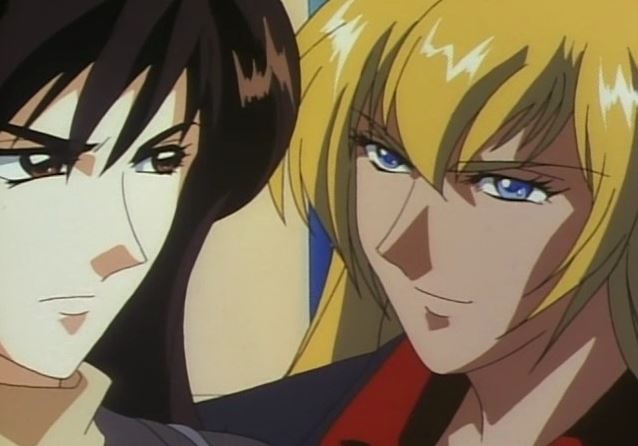
Fashion model Jun Fudou seemed to have a glamourous life, but as we quickly find out, once the cameras all pack up, this deeply private and reserved woman tends to retreat into herself and has few friends or family. Hers is a quiet, lonely life—but not a miserable one. This changes when beast-hunter Lan Asuka “spots” her as a carrier of the demon-beast gene and forcibly recruits her as a hunter, compelling her to transform for the first time to save her own life. The knowledge of what she is horrifies Jun, as does the prospect of fighting monsters on a regular basis, and she even contemplates suicide. She finally decides to agree to Asuka’s devil’s bargain—a normal, unimprisoned life by day in exchange for her services as a hunter by night. A final wrench is thrown into her once-peaceful existence when a younger female model and Jun’s only good friend, Kazumi Takiura, moves in with her after her parents are murdered by a devil-beast who was targeting Jun.

Devil Lady - Jun and Kazumi 1

Kazumi’s arrival throws a bright spot into Jun’s life—she’s the kind of bubbly, happy influence who pairs well with Jun’s reserve, and Jun even develops feelings of love for the girl that go beyond friendship. However, the cruel beauty of this anime is that even this one bright spot only serves to highlight the dark shadows of Jun’s existence. Throughout the anime, Jun is tortured by self-loathing over her demonic “other half” that she doesn’t dare reveal to Kazumi for fear that the one person who cares for her will reject her. Lan Asuka is contemptuous of Jun’s human half and regards her as a pet tiger—more animal than human, but beautiful in her inhumanity (which doesn’t help Jun’s self-esteem, either). All of this combines to an existence that is painfully lonely and softened only by a few human ties that are incredibly fragile.

This would be interesting enough in itself, but the show takes a sharp twist when the isolated devil-beast outbreaks that Jun and Asuka have been dealing with suddenly take a numerical uptick and become a rising epidemic. The devil-beast attacks finally become too large and public to hide, and the secret gets out. There are also two other big reveals. The first is that the devil-beasts are not lone freaks. A surprisingly large percentage of humanity generally carries the gene to a greater or lesser extent—and the stimulus for an individual’s transformation can be visual and sensory. In other words, merely knowing of the existence of other devilmen or devil-beasts is enough to substantially increase the likelihood that the gene gets triggered, causing the transformation. Because of this, the government’s failure to keep devil-beasts a secret gains outsize importance, and the trickle of transformations becomes a flood. That flood becomes an apocalyptic deluge when a certain blonde gives the public “vaccinations” that actually hastens the emergence of the devil-gene, with the goal of drawing them all out into the open at once.

Devil Lady - Devil Gene 2 (Chika)The second reveal is that the devil-gene is not especially dominant in most people who carry it, and many experience transformations that are irreversible but relatively minor—they might grow a tail, or antennae, or glow in the dark—but they otherwise remain fully human. This does not stop the normal humans from rounding them up in concentration camps to commit a holocaust.
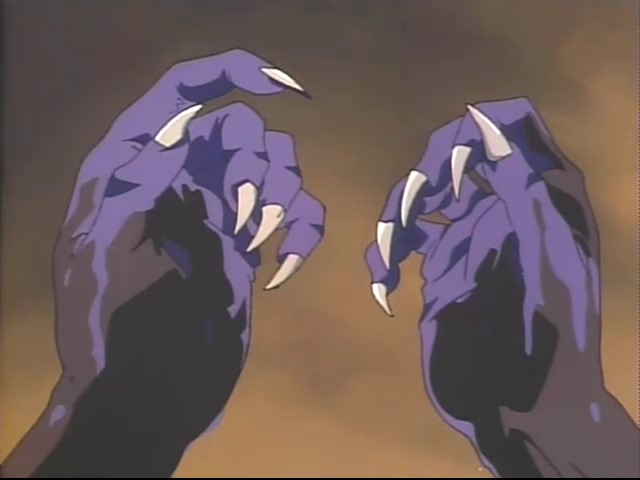
At the same time this is going on in broader society, we see this trend toward dehumanizing treatment of devilmen get applied to Jun in particular. From the very beginning, many of her many military handlers treated her as a trained animal rather than a full human being, and once her usefulness in keeping the epidemic a secret becomes a moot point, she gets caged and experimented on like an expendable lab rat. Jun is then faced with a double layer of temptation and a ton of existential moral questions. Does her self-identification as a “human” obligate her to keep fighting for other humans who treat her as less than an animal? Is she even still human? Are they now the real monsters? Should she join the other devilmen who want to establish themselves as a new “master race” on Earth? Could she be a neutral party? Would either side let her?

Devil Lady - DL Guilt 1

This theme of dehumanization was by far the darkest and most sobering element of this already-troubling anime—not because it’s over the top, but because it’s all too real. If the events of The Devil Lady took place in real life, and a new mutant strain of humanity emerged—some of whom were monsters, but some of whom were mostly like us—we would be faced with the same crisis faced in the anime. Do you embrace the sane and normal mutants, only policing those who cannot control themselves and devolve into beasts? Do you imprison them all, hoping to halt the decline of normal humanity’s numbers by isolating the gene-carriers? Or do you leave nothing to chance by wiping the devilmen from the face of the earth?

In X-Men, humanity was constantly waffling between the “embrace” and “containment” options, depending on how spooked Magneto had them on a given day. In Devil Lady, humanity immediately jumps to “containment” and moves on to “extermination” with stomach-twisting alacrity, and I can’t honestly say that I doubt the writers’ grim prediction. Openness to the unknown takes both circumspect wisdom and a lot of courage; sometimes humanity manages that on its best days. Unfortunately, humanity also disappoints a lot of the time, and mankind is especially violent and un-courageous when we’re afraid.

Devil Lady - Jun and Kazumi 3

The trend we find in Devil Lady of one group of people perpetrating atrocities on another out of fear and being led to consider them “less than human” – that isn’t fiction. It’s the same impulse that led to the Holocaust, to the Armenian Genocide after WWI, and to Joseph Stalin’s intentional starvation of the Ukraine in the 1930s. What’s so chilling and unsettling about the devilmen genocide depicted in The Devil Lady is not the possibility that it could happen, but the certainty that it could. I give this anime a lot of respect for having the courage to tread down this dark path, and even more credit for finally leading us to a way out. More on that in the next and final part of this review!

ANIME REVIEW: The Devil Lady (Part 1)

NOTE: Every once in a while, I have more to say about an anime than can easily fit in a single review. The Devil Lady, or Devilman Lady, is a thought-provoking, awesome horror / dark fantasy anime that is good enough to merit that kind of multi-part coverage. Today we’ll start with a spoiler-free review of the series to provide an overview—in the follow-up articles, I’ll dive more in-depth into the series’ symbolism, drama, and dark themes.

Lesson learned: never judge an anime by its cover art. I avoided The Devil Lady for years on the assumption that it was just another gory splatterpunk anime, a genre that tends to be strong on creative transformation sequences but pretty abysmal otherwise. However, I found that I underestimated this show. The Devil Lady has heart and a fascinatingly gray moral core.

Devil Lady - Asuka and Jun 1

The Devil Lady is a horror story, but looking below the surface, you could also describe it as equal parts Hellsing, X-Files, and X-Men. It tells the story of Jun Fudou, a beautiful but timid fashion model who finds herself drawn into a battle for humanity’s survival. She has a strange mutation in her DNA that allows her to change into a demonic monster, but unlike most of these “devil beasts,” she retains her sanity and conscience while transformed. Jun is drafted against her will to fight other devil beasts by an ice-cold blonde named Lan Asuka who commands a secret, government-sanctioned paramilitary organization (much like Hellsing – but note that Devil Lady predates it by several years). This is a shadow war – kept out of the media, waged to end the threat of monsters who often look like ordinary people on the surface, and fought against the backdrop of a gradually unfolding conspiracy (much like X-Files). Finally, the show’s gray morality centers around Jun herself, a mutant of sorts who is fighting to save a world that hates and fears her, even as other, more violent mutants call her a traitor and mark her for death (much like X-Men). Get the idea?

It’s a weird mix that could have ended disastrously, but The Devil Lady pulls off its occult formula with flying colors. For starters, this anime is wonderful about taking its time when appropriate. It will slowly set up a creepy scene with music that makes your skin crawl. At other times, quiet, sad scenes with equally sorrowful music will absolutely break your heart. (If you haven’t noticed, I’m a fan of the score.) It also features a manageable-sized cast of characters who almost all develop as the anime progresses. You may be alternately impressed or shocked by how much you end up caring about people you assumed would only be background characters.

Devil Lady - DL Battle 2

The writing is extremely sharp, and its plot twists pass the litmus test of making even more sense after a second viewing. There are some phenomena that are never completely explained, and the extent to which all of this madness is caused by mutant biology versus the supernatural occult is an especially muddy point. However, I feel it’s acceptably ambiguous. You’re provided with all of the information you need to make sense of the story, and it’s okay to leave a certain amount open to the individual viewer’s imagination and interpretation. The rouge’s gallery of monsters is awesome – sometimes a bit weird, even considering the strange premise, but always creative and grotesque. The action sequences are well-done – not usually flashy or impressive from an animation standpoint, but their quality is consistent and does the job, and the character artwork during battle is top-notch.

Devil Lady - Rogue 2

Devil Lady does have a few possible turn-offs despite its quality, though. For one, the animation style looks very dated for a turn-of-the-millennium series, and the artwork can sometimes be noticeably dark in the literal sense. You’ll encounter quite a few scenes with dark-brown figures walking down a dark blue corridor in dim light, and the whole thing can literally be hard to see. (I think a good remaster on Blu-Ray could mitigate this through sharper clarity and contrasts.) There’s also a lot of light nudity, but it makes sense in context to heighten the animal nature of the transformed devil-beasts rather than being there for fan service and giggles. The English dub voicing is apparently a matter of some contention. I personally loved the dub, but I have read other reviews from people normally friendly to English dubs who didn’t care for it, so you may have to try it yourself to judge. Lastly, this anime shouldn’t be attempted by people who are easily depressed, because it can be a humongous downer. Once the engineers start shoveling coal in the main-character misery train, it’s full steam ahead until episode 26, and the sheer volume of unhappiness can become draining after a while.

One quick, last note: despite his heavy billing, this particular iteration of Devil Lady really isn’t manga-ka Go Nagai’s baby at all. Nagai did create the character, and his original manga introduced the characters Jun Fudou and Lan Asuka, but the similarities end there. The anime adaptation completely reworked the story and even much of the basic concept, so, love it or hate it, most of the credit for this TV series rightfully goes to Chiaki Konaka (series creator / screenplay) and Toshiki Hirano (director).

As of the writing of this review, ADV’s release of The Devil Lady is out of print, but it’s not impossibly expensive or hard to find if you get it used. I would love for another anime licensor (maybe Discotek?) to pick this one up and give it the Blu-Ray treatment. It’s honestly one of the best-thought-out and most compelling anime I’ve ever watched, to say nothing of being a great tale of dark suspense, and I have no hesitation at all in putting it in my personal “Top 5” list of favorite anime. The Devil Lady deserves better than to be cast into out-of-print hell, and if we’re lucky, someday she’ll claw her way out.

UPDATE (1/2021): Well, let it never be said that Christmas wishes don’t come true! The Devil Lady is back in print under its original Japanese title, Devilman Lady, and as I predicted and hoped for, it’s on a 1080p Blu Ray by Discotek! I was thrilled to receive my copy, and the results of their efforts are better than I could have imagined. Discotek obviously went back to the original masters for this release, because the quality of the images is leaps and bounds better than the original ADV DVDs. The HD contrast sharpened up the lines just like I’d hoped it would, but I was completely unprepared for how much better the color looked. Reds, yellows, pinks are deep, vibrant, and brilliant, and even the blues and blacks are a deeper and more consistent in a way that helps dark scenes stand out. By comparison, ADV’s transfer looks positively washed-out and almost snowy at points. Discotek also restored the original Japanese title sequence, which ADV had slightly altered to insert an English logo, in favor of keeping the original images but adding subtitles for the kanji. The Discotek release comes on two discs with an outer slipcase, and it does include ADV’s original English dub, which is one part of the original release that I gave high marks. Literally the only bad thing I have to say about this new Blu Ray edition is that they picked a fairly boring image for its front cover. Otherwise, this late 2020 release is simply outstanding. Major, major props to Discotek for giving this classic anime the gorgeous remaster it needed and deserves.

ANIME REVIEW: Yuyushiki

Yuyushiki 1

The modern “cute girls doing cute things” genre of anime based on 4-panel manga got introduced by Azumanga Daioh in 2000, was epitomized by Lucky Star in 2007, and has been copied by what feels like a half-million enjoyable but unremarkable anime ever since. It’s an innocuous little sub-genre that’s hard to get mad at or get tired of because these series tend to be adorable and fun, but it’s also hard to say anything new about the genre or break new ground in it. It’s easy for even a solid series of this type to get lost in the crowd.

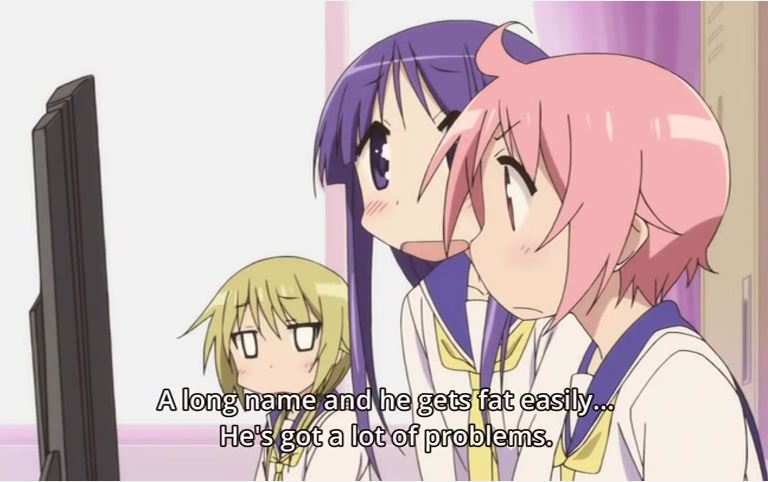
So, against this endless mob of adorable competitors, how does the 2013 anime Yuyushiki hold up? Short answer: admirably well. Now for the long answer, beginning with a summary… Yuyushiki tells the story of three high school girls who are close friends, and the title comes from the fact that all of their names begin with “Yu-”: pink-haired Yuzuko, blonde Yui, and blue-haired Yukari. The series mainly just follows them around in their daily life as they have weird conversations, attend class, and hang out. The only thing resembling a plot point is that they happen to join the defunct and then-memberless “Data Processing Club” presided over by their young homeroom teacher, who they always call “Mom” because of her sweet and motherly nature. “Mom” isn’t eager to drive away her new club members by forcing them into the dry activities that likely killed the first club, so she basically lets them sit around in the computer room after school, Google things, and “process” the data they learn, often with hilarious results. And… that’s it.

Yuyushiki - Fat

It’s a simple concept… so simple that it could easily have been killed by too much gentleness or over-reliance on cuteness. Thankfully, Yuyushiki went a different route by making this a character-driven banter comedy with an old-school comedy vibe. It may sound weird to say, but Yuzuko, Yui, and Yukari have at least as much in common with the Three Stooges, Abbott and Costello, or Laurel and Hardy as they do with the heroines of 4-koma series like Lucky Star.

You have Yuzuko, the zany clown who is constantly coming up with weird ideas that throw the others for a loop (Curly, Costello, Laurel).

You have Yui, the serious-minded “straight man” who mostly serves as the voice of reason and a foil to the clown, but who is still zany enough to participate in her antics (Moe, Abbott, Hardy).

Finally, you have Yukari, your ditzy and loveable third wheel who is just as crazy as the clown but tends to bounce off her antics rather than instigate the madness (Larry, Shemp).

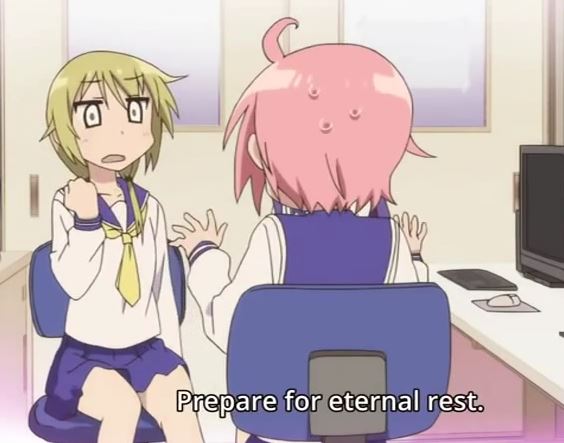
Yuyushiki - Prepare for death

It’s classic comedy in the best sense – you throw these strong, vivid, and funny personalities in a box, toss in a new topic every once in a while, and funny stuff happens. Most of the humor in Yuyushiki is conversational and dialogue-based, separating it from the physical humor of Nichijou or the surreal happenings of Azumanga Daioh. It also makes an effort to remain truly funny rather than just charming, which means those viewers who were exasperated by the long conversations about food in Lucky Star can unclench their teeth. Most of the characters other than the main trio are not particularly interesting, but that’s partly the point – with a few momentary exceptions, their purpose is to provide new fodder for the Yu-Yu-Yu comedy show rather than take up space as detailed characters in their own right.

Other than the classic banter comedy, the artwork is also a big draw for Yuyushiki and sets it apart from the crowd somewhat. It tends to be cartoonish and shoves detailed realism to the side, but the animators have a real gift for showing emotion (and increasing comedy) through facial expression. The voice actresses (Is there even a male character in this show?) all do fantastic jobs—again, with the main three deserving special praise. I have nothing at all to say about the music, either the BGM or the opening and closing tunes. They are entirely unremarkable, but fine. Yuyushiki was licensed and released in North America by Sentai Filmworks, and it’s a competent but fairly bare-bones release – they have both DVD and Blu-Ray options, but no English dub, no extras other than a “clean” opening and ending, and none of the OVAs (which were a bizarre but funny little CGI series where they all became catgirls in a weird pocket dimension).

Yuyushiki - Friends

The last thing I’d mention about this series might surprise you given the picture I’ve painted of it so far, but it has a knack for throwing in moments of whimsical sadness at you that breaks through the comedy to land right in your feels. Specifically, it’s very clear throughout the series that these are the adventures of these girls’ teenaged youth – a time in life that, fun as it is, won’t last forever. They will each grow up and have lives that will be more separate than they are now by necessity, and that point is poignantly made several times throughout the series. Thankfully, it’s always counterbalanced by the happy belief that friendship can endure as long as the people involved are determined it will, and that is backed up by several little moments such as “Mom” talking to her friend from high school who she still remains best friends with despite their separate professions. All-in-all, it’s a nice message that improves the show and carries with it more sweetness than sadness.

I get a sense that Yuyushiki didn’t attract much attention due to the glut of similar-looking “cute girls doing cute things” shows that also came out in 2013, but it’s definitely closer to a hidden gem than cutesy ephemera. Its old-school character chemistry comedy breathes a bit of new life into this worn-out genre, and while it won’t be a life-changer by any means, this anime is consistently hilarious, very sweet, and absolutely worth your time if you like comedy anime. Support more “Three Stooges: Cute Anime Girl Edition” series by checking it out!

Availability: This series is available as a DVD or Blu-Ray physical release licensed by Sentai Filmworks, or it can be legally streamed on the Anime Network.

ANIME REVIEW: MM!

MM 1

It Hurts So Good

Whatever else you can say about it, MM! pulls no punches when throwing out wacky examples of deviance to comedic effect. It manages be less entertaining than the sum of its parts, unfortunately, but this anime still has enough good points to be worth a watch. Before I explain, let’s rewind a minute for a summary.

Taro Sado is a high school student with a major problem – he’s a masochist, and not just a little bit. Any sudden spike of pain sends him a euphoric state and leaves him uncontrollably pleading for more. This creeps out his classmates, and it has earned Taro such a bad reputation that he’s desperate to shed his mega-masochism (the MM of the title). When he hears of the Second Volunteer Club whose stated goal is to “make students’ dreams come true,” he hopes they may be able to cure him, but their “cure” may be deadlier than his disease. The club is run by a petite but fierce blonde named Mio whose primary treatment method seems to be trying to cure his masochism by awakening his survival instinct—putting him in so much pain that fear of death overcomes pleasure! Along with the club’s other members—a cute girl named Yuno who has severe androphobia, a cross-dresser, an underaged mad scientist, and the world’s least responsible school nurse—Taro and Mio set out to discover whether or not “even if it kills you” is really a valid treatment philosophy.

MM 2

If that summary made you laugh or grin, you aren’t alone. MM!’s premise is funny as hell, and to some extent the series delivers on that promise. Mio is endlessly inventive with her methods to “cure” Taro (read: torment to the point of ecstasy), even if her success rate is questionable at best, and his reactions are just as funny. Despite the pervy subject matter, MM! also isn’t sexually explicit in any way – Taro’s turn-ons are represented by a dazed, happy look, nosebleeds, steam pouring off his head, giddy laughter, etc., and the series also features zero nudity. This is a comedy anime through and through – which in some ways is also its downfall.

The big problem with MM! is that while the comedy is fantastic, it flops in practically every other regard. This anime features no particularly unique characters, and they never get developed beyond their one-dimensional beginnings. Mio is a stereotypical tsundere who is only atypical in the violent intensity of her tsun (sour / angry) moments, and aside from the masochism thing, Taro is the same blasé good-guy male protagonist you can find in any comedy anime.

MM 3.5

The only character who receives any development at all is Yuno, the androphobic girl. The series spends a lot of time fleshing out her backstory in the first 5 episodes or so, explaining why she’s afraid of men and building a believable case why she would fall in love with Taro. This is easily the best and most interesting part of the series – it’s touching, makes you feel like the plot is going somewhere, and makes you like the characters. The problem is that this forward momentum disappears after episode 5 and is never seen again. From then on, we mainly just have gimmick-of-the-week episodes that do show Yuno and Taro growing a little closer at points, but never anything significant. This makes the romantic quality of the first few episodes feel like a tease, and it might have hurt my enjoyment more than if it had just been straight comedy the whole way through.

We’re also clearly supposed to feel that Mio is Yuno’s romantic rival, but I just can’t see it. She’s obviously a bit of a sadist (in the clinical rather than cruel sense) who is forming a symbiotic relationship with Taro in which torturing him becomes a grand old time for both of them. (She’s the last one to realize this, until it’s pointed out to her great surprise in Episode 10.) I actually really enjoyed watching her and Taro interact, and weirdly enough, Taro and Mio reminded me a lot of Charlie Brown and Lucy from Peanuts in their confused relationship. She is definitely the smug bitch who pulls the football away every single time right as he’s about to kick it, but he keeps coming back to her for psychiatric advice year after year, so clearly he feels like she’s doing him good in ways that may not be easy to articulate.

With that said, the romance element was poorly developed with Mio. Taro has very few of the bonding moments with Mio that we routinely see him get with Yuno, nor were there enough moments where Mio saw him as anything more than an interesting pastime. In short, for a character who’s essentially the series’ mascot, Mio got unpardonably short shrift in terms of meaningful screen time.

The series is at its comedic best when it spirals down into a laugh-out-loud train wreck of ridiculous deviance. Two of my favorite examples of this occur late in the series. One is where Mio hypnotizes Taro’s masochism into a suppressed state, only to have him suddenly erupt into several other different types of extreme perversion. (It cannot be contained!) Another is when the mad scientist girl kidnaps Taro to “play house” – a game where the whole cast gets involved – and the whole business devolves into a messed-up soap opera where everyone right down to the neighborhood mailman is having an affair with Taro, “the father.” MM! also occasionally goes into straight parody territory, spoofing Dragon Ball Z on two occasions. This is a little funny and results in some classic one-liners, but overall this style of humor is flatter and less interesting than the harmless raunch that makes up MM!’s original material.

MM 4

In terms of visuals and music, MM! is what I’d describe as “perfectly adequate” – neither impressive nor a letdown. The animation is middle-tier, though I will say the coloring is particularly nice – a lot of browns and deep purples that you don’t often see, and the effect is nice. For music, the background music is non-intrusive and bouncy without ever drawing attention to itself, and the ending tune is okay. The only musical standout is the catchy opening, “Help!”, which has great background visuals, a fun chorus line (“Chu-chu-chu-chu, to help you!”), and lyrics that are either funny but not cringe-worthy Engrish (“Je-sus Cri-sis Oh-My-Gah!”) or kind of sweet (“I’ll help you change your life philosophy”). There are two versions of “Help!”, called the “Hell” and “Heaven” sides. It swaps over about mid-series with new visuals, but the sound is similar enough that you might not even notice the difference aside from subtle changes to the subtitled lyrics.

Overall, MM! is pretty solid, but not everything it could have been. You will laugh to the point of tears at some points, and it’s always a fun watch. I just wish it could have spent its screen time a bit more wisely to do some actual character development in its later episodes to go along with its comedy. This is one I can definitely recommend as a streamed watch, but I can’t in good conscience recommend it as a physical purchase unless you find yourself much more impressed with it than I was.


ANIME REVIEW: And Yet the Town Moves (Soremachi)

Soredemo Machi wa Mawatteiru - 09 - Large Preview 02

Slice-Of-Life Done Right

Sometimes when an anime series doesn’t catch on, it’s not the fault of the series itself, but just a matter of a mismatch with its audience. The 2010 anime And Yet the Town Moves from Sentai Filmworks (known in Japan as Soredemo Machi wa Mawatteiru, or Soremachi for short) is an excellent case in point. It didn’t make much of a splash here in the United States because it’s such a thoroughly Japanese slice-of-life anime, but that obscurity is a darn shame, because the series is pretty fantastic.

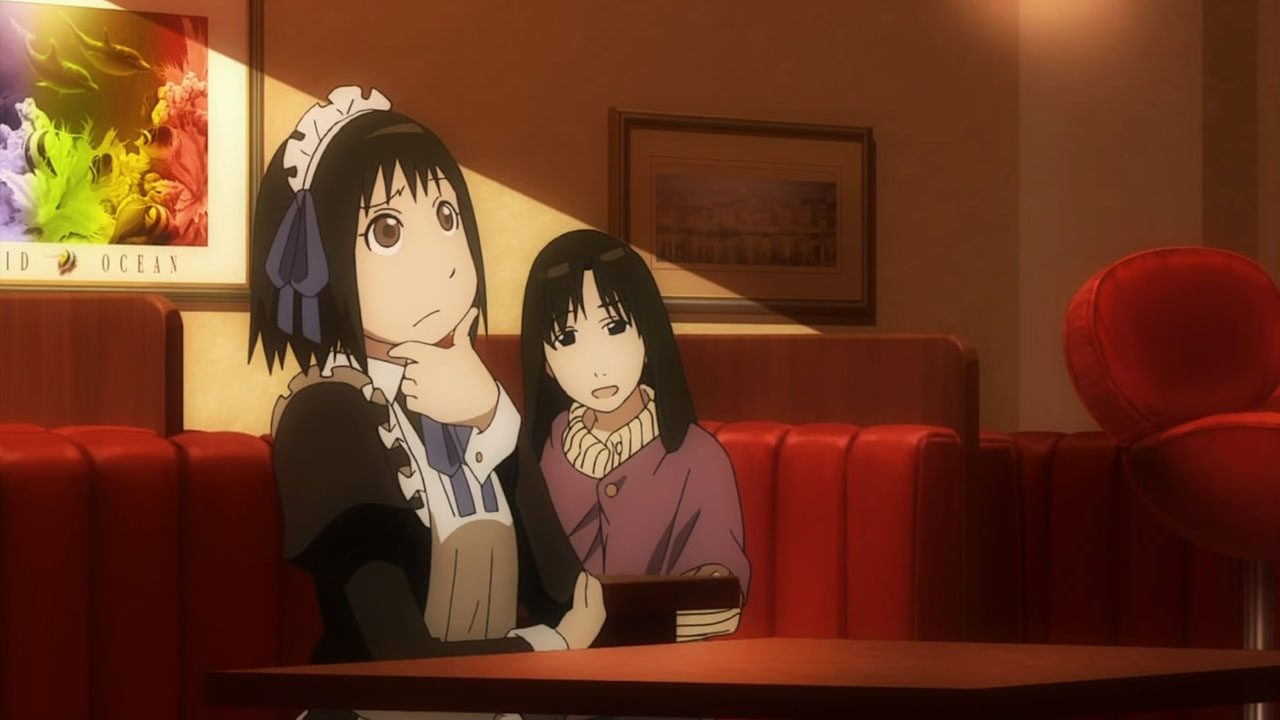
And Yet the Town Moves follows the daily life of Hotori Arashiyama, a loveable dingbat of a high school girl who lives in a small Japanese town, dreams of becoming a detective, and works part-time as a waitress in a maid café. The series also features her family, her teachers, her boss, and her friends: a brainy but slightly arrogant cutie (Tatsuno / “Tattsun”), a cool and rockin’ upperclassman (Kon), a boy who secretly crushes on her (Sanada), and a ping-pong champ (Haribara). Together they… just live normal lives, really. Just funnier than ours.

SoredemoMachiwaMawatteiruep03a.jpg~original

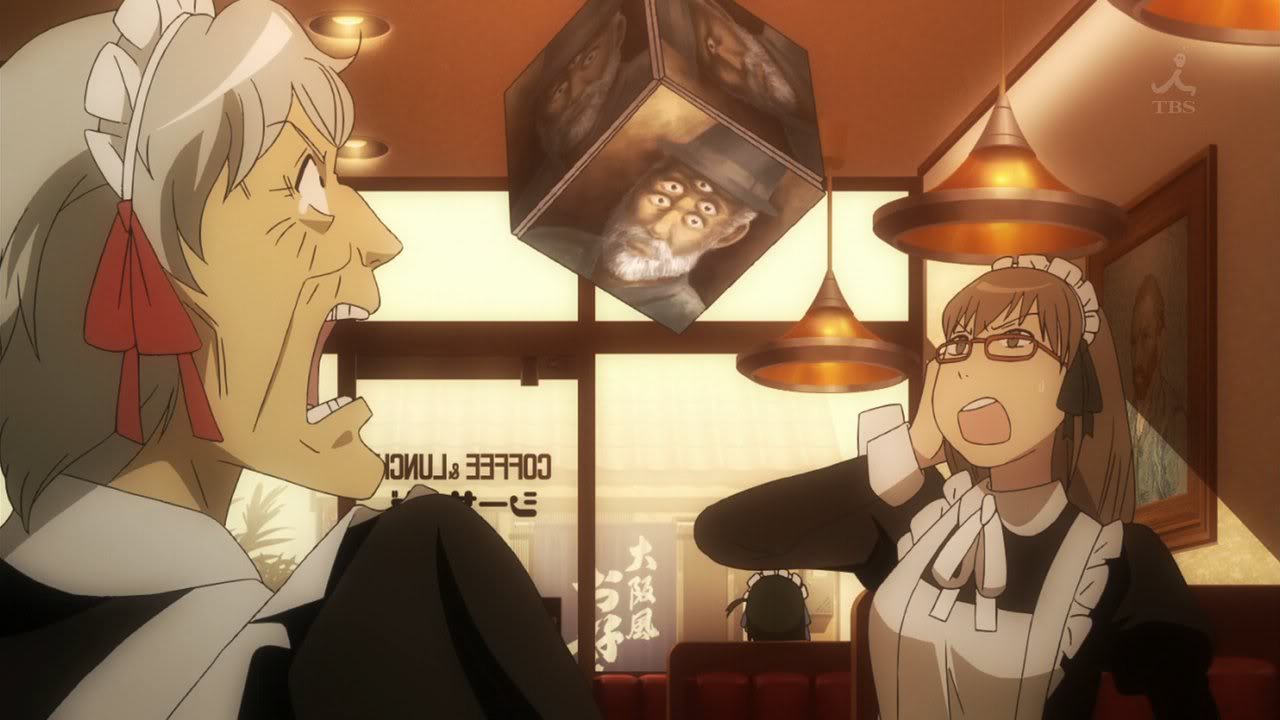
On the surface, it sounds like a less-than-inspired entry into the “cute girls doing cute things” genre, but that stereotype and even the summary I just gave start to break down when you start looking at the details. With the exception of Tattsun, none of these girls are breathtakingly pretty, and poor buck-toothed Haribara is ugly as sin. The maid café where Hotori and Tattsun work is actually a run-down regular café the elderly owner thought she’d spice up by wearing uniforms. Despite occasional flashes of surprising brilliance, Hotori is mostly dumb as a rock and whines a lot. Wannabe-badass Kon is secretly a mama’s girl.

All of these characters, and the town itself, are just very real. This is not the cute-washed Japan of most girl-group anime, nor a self-absorbed otaku geek-fest, nor a stylized samurai epic, nor a whimsical Miyazakified Japan of Disney-level purity. This is how people really live, and how people really are: flawed but generous at their cores, living a life that can be funny not because of the environment itself but because of people’s reactions to it. That level of comfort with everyday life and confidence in finding what’s hilarious about it are the qualities that make And Yet The Town Moves special.

soremachi11-02

With that said, this same realism might have hurt its chances on this side of the Pacific because the series is just so Japanese. I consider myself fairly well-versed in at least most surface aspects of Japanese culture, but this show pulled out puns, folklore, superstitions, and random little customs and traditions that I’d never even heard of. The style of humor is also very typically Japanese, which won’t deter dedicated anime fans but might raise the hurdle a bit for more casual viewers.

Speaking of humor, the plotting of the episodes deserves major credit for the way it contributes to the slow-burn comedy. Virtually all of the comedy can be tied to two concepts: a meandering common thread that leads to unexpected results, or an escalation of something that should be simple and low-key into something epic. The “common thread” is announced by our very philosophical narrator at the beginning of each episode and repeated at the end, at which point his abstract point has often taken on very funny concrete implications in the lives of the characters.

soremachi-1

And Yet the Town Moves was produced by studio Shaft, which also produced Maria Holic. Fans of the latter will definitely see some correlation in the humor styles and in some characters (esp. math teacher Mr. Moriaki and MH’s Father Kaneda), but Town is much gentler in its humor compared to the dark, biting parody of the yuri genre presented in Maria Holic. Another commonality with Maria Holic is that Town sometimes introduces strange science-fiction elements into its otherwise grounded story, much of which can be attributed to Hotori’s overactive imagination, but not all.

Other stuff worth mentioning include the visuals and the music. As I mentioned, this is a Shaft anime (which produced Maria Holic, Monogatari, etc.), and their reputation for beautiful artwork does not fail them here. The town itself is vibrant and well-realized, and the variety of character models is a great breath of fresh air. While the background music is seldom anything to write home about, the opening and ending tunes do deserve special recognition. The ending, “Meizu Sanjou!”, is not exactly contagious, but it is funny and captures the series’ humor well. The opener, “Downtown,” is a beautiful, jazzy earworm that uses trumpets and glitz to great effect while capturing the visual beauty of the art style and animation. (Watch it below.)

Altogether, And Yet the Town Moves is 110% worth your time. It’s visually gorgeous, laugh-out-loud funny, and genuinely sweet without ever dipping into cheap sentimentalism, melodrama, or five-cent whimsy. It’s a slice of life done right, which is a rare and beautiful thing. Be sure to check it out.


The Cost of Illegal Streaming

Anime Obscura tries not to duplicate / reblog content for the most part, but I thought this was too well-researched (and important!) not to share. We all know that illegal torrenting costs the anime industry a lot of money, but how much are we talking about, exactly? Jenbae over at GoBoiano crunched the numbers to find out.

http://goboiano.com/list/4104-how-much-money-you-cost-the-anime-industry-when-you-illegally-stream

While the number is difficult to pin down exactly, it’s something to the tune of $33 million per year (by the most conservative estimate) and may reach as high as $132 million per year. That’s a staggering amount of money that will never go toward making second seasons of your favorite series or improving the quality of existing ones. If you want to support the anime industry — and I mean helping it continue to exist, not creating gifs or memes — then please take advantage of the many ways to stream anime legally (described elsewhere on this site) or make a rental or purchase.

So, that’s today’s PSA. Thanks for reading, and back to our regularly scheduled nonsense!

ANIME REVIEW: Hanappe Bazooka

SPECS

Available Formats: VHS only

Run Time: 45 minutes

Sub/Dub: Sub only

Publisher: ADV Films

Year: 1992

Rating: NR, but 16+

Those Obnoxious Demons

It’s interesting how certain anime or manga publishers sometimes get a “lock” on certain creator’s works. Just as Viz had and has the rights to almost all of Rumiko Takahashi’s series, back in the 1990s Houston-based A.D. Vision (or ADV) achieved a near-monopoly on the works of manga-ka Go Nagai. I would be interested to know if this was founded on some sort of business arrangement with a Japanese counterpart who worked closely with Nagai, or if it was the result of some bigwig at ADV being a huge fan of his work.

Regardless, a “Go Nagai empire” was in many ways a strange choice of monopoly. I say this because Go Nagai is the reigning king of acquired taste and uneven results. Over the years, anime based on his work have generated some international smash hits (Mazinger Z, Cutey Honey, Devilman), some titles that gained niche appreciation but no widespread popularity on this side of the pond (Demon Prince Enma, Devil Lady, Kekko Kamen), and some truly wretched drek that is better off forgotten (Demon Lord Dante, Black Lion, Violence Jack). Good, bad, or ugly – complete or incomplete – ADV was on a mission to publish the anime adaptations of all of them. However, of all anime based on Go Nagai’s work and published in North America, perhaps the most obscure was the weirdo title Hanappe Bazooka.

Hanappe Bazooka was a 45-minute OVA that followed the misfortunes of a young man named Hanappe who gets roped into a way-too-close encounter with the demonic kind. Hanappe is a bit of a coward with terrible luck, and the anime starts with him trying to outrun a local gang. He ducks into a video store to escape, happens upon a pervy VHS tape, and covertly slips it under his shirt and takes it home. He watches it that same night, and in the middle of… doing what you do while watching such a tape… the sky becomes pitch-black above his house, a portal opens to an eldritch dimension, and these two come out: the demons Bazooka and Dance.

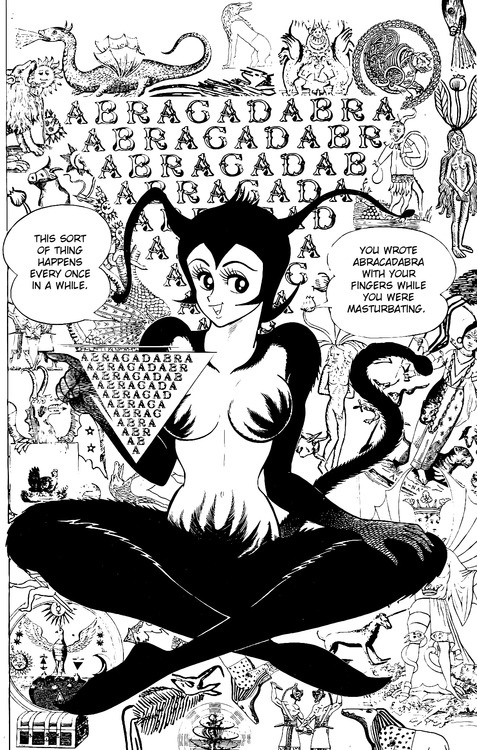
Hanappe Bazooka - Dance (Manga)According to Dance, Hanappe accidentally performed an obscene rite during a cursed planetary alignment that opened a portal from the demon world. The ancient rite had the exact same motions as Hanappe dancing around with his **** out, and in Dance’s words, “When you came… so did we.” (Welcome to the world of Go Nagai, people.)
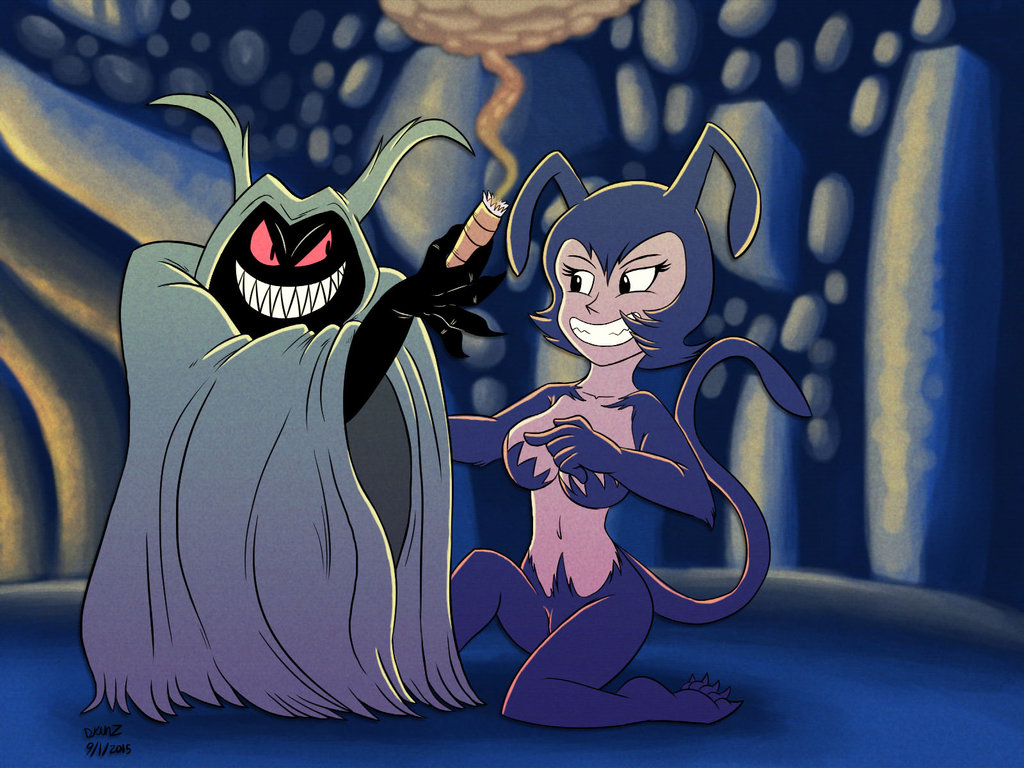
What follows is Bazooka and Dance making themselves at home in Hanappe’s home and striking up elicit (but surprisingly consensual) trysts with his mother and sister. In exchange, they try to offer Hanappe one demonic superpower after another – super-strength to destroy the gang, a ray beam from his finger that auto-seduces women, help getting closer to his crush – all of which backfire horribly and hilariously. In the course of these twists and turns, we discover that Dance and Bazooka are actually aliens from space, and humanity’s previous experiences with their twisted kind gave rise to lore about demons.

The state of affairs that is making Hanappe miserable is heaven to everyone else in his life, and his family, Dance, and Bazooka all mock his suffering and basically say Hanappe can go jump in a lake if he doesn’t like it. They push him too far, though, and Hanappe eventually does something shocking and tragic. The anime takes a surprising turn at this point as we find out that Dance and Bazooka aren’t as heartless as they let on, especially where Hanappe is concerned. They resolve to make things right with their erstwhile-victim, no matter the cost or danger.

In the end, Hanappe Bazooka is emblematic of what makes so many Go Nagai anime adaptations a goulash of the terrific and the terrible. On the plus side, this thing is batshit insane in terms of its plot, and I would have to worry about anyone who claims “I saw that coming” more than a few seconds in advance. I also really started liking the characters of Bazooka and Dance by the time the credits rolled. They’re certainly still mischievous, but in the end, the demons were the most human characters in the cast. (Kind of a Go Nagai trademark, that.)

bazooka_and_song_by_megadrivesonic-d9b0n4g

On the downside, this anime is badly rushed and utterly schitzophrenic in terms of mood. This anime jumps from being utterly horrifying or tragic to making cheap boner and fart jokes at a second’s notice. It also tries to include way too much in a 45-minute timeframe: we have a Hanappe’s personal struggles, his love interest’s pathetic backstory, information about the demons’ alien society, and a cosmic final battle all thrown at us far too fast to do justice to any of these themes. I get the strong impression these are problems with the anime adaptation rather than Go Nagai’s original manga, though. From what I’ve seen, it was more light-hearted throughout, and the plot progressed at a much more leisurely (and sane) pace, letting things play out in monthly installments over 3 years as opposed to being crammed together in 45 minutes.

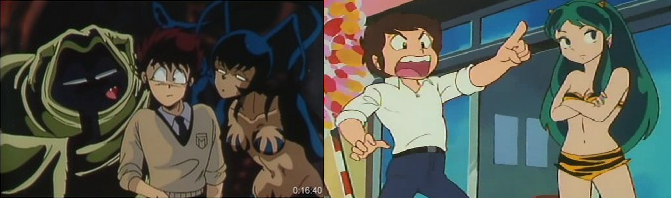
Two last quick things to mention… First, it’s important to note that despite Hanappe Bazooka’s seeming randomness, it borrows a huge deal from Rumiko Takahashi’s Urusei Yatsura, which was published the previous year (1978 versus 1979) and became a smash success. Urusei Yatsura introduced the concept of extraterrestrials influencing mankind’s conception of demons (there, the alien oni / ogres), and the fact that we have another alien-demon girl chasing a horny-but-unfortunate guy who looks just like Ataru Moroboshi seems like more than just a wild coincidence. Still, Go Nagai does make the material his own – Bazooka and Dance are notably more demonic in attitude and presentation than Lum, the material is gleefully irreverent, the humor is more defiantly childish, and the ending is weirdly touching despite all the nonsense that came before it.

Hanappe and Lum

Lastly, if you happen to get your hands on ADV’s old VHS tape (the only official release of Hanappe Bazooka in North America to date), be sure to keep watching after the credits roll. The VHS has a really fun featurette showing the voice actors and actresses doing their thing, a little directorial discussion about the anime adaptation and storyboard, and Go Nagai himself making a voice-acting cameo in the OAV. (His nervousness over his three-second role is funny and endearing.)

And that’s it! Hanappe Bazooka isn’t one of the best or most essential Go Nagai anime out there, nor would I pay more than $25 or so for it unless you’re a very determined completionist. That said, it is fun and a genuine example of “anime obscura” that you can out-hipster your friends with. Check it out if you get a chance.